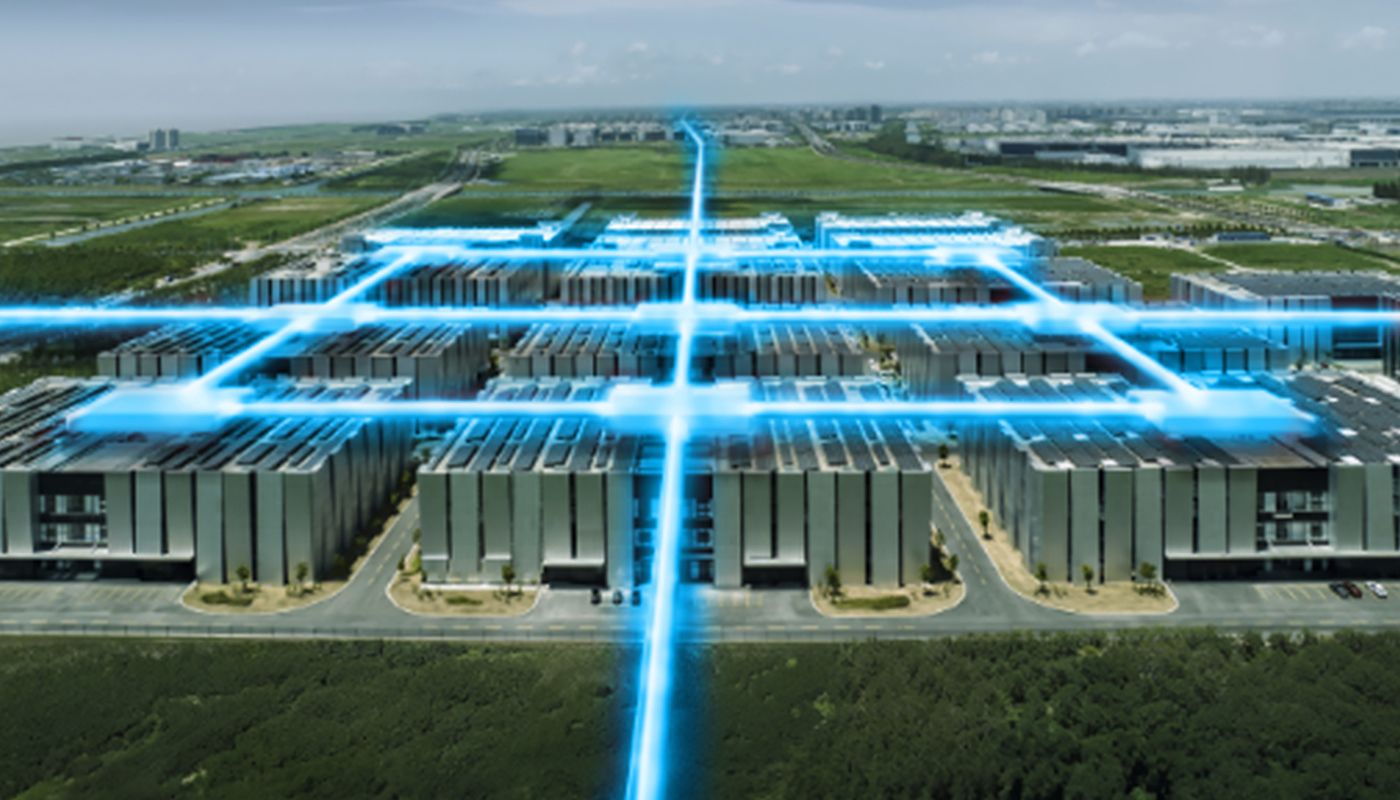


Simplifying the path to high-performance data center interconnects
AI-driven workloads are placing unprecedented demands on data center interconnects (DCI), requiring higher speeds, ultra-low latency and massive scale across campus, metro, core and long-haul environments. From build to assure, automated validation and continuous visibility into link behavior are essential to ensure reliable performance, accelerate deployment and simplify operations across current and next-generation DCI infrastructure.
Overcoming the complexity of modern DCI networks
AI is accelerating the evolution of fiber and transport networks—but with it comes growing pressure to deliver flawless performance, keep costs in check and improve operational efficiency across increasingly complex infrastructures.
AI driving stricter SLAs
Stricter SLAs are necessary to meet QoS standards and end-user expectations on upgraded high-speed networks (100G, 400G, 800G). With more users and devices relying on the network, downtime is simply not an option.
Ethernet networks evolving faster than ever
Rising speeds and advanced optics add complexity—making “plug-and-pray” approaches unreliable and testing crucial to ensure performance across all rates.
Juggling emerging transceivers
Coherent optics enable faster speeds and longer reach in metro, core, and DCI networks—but require thorough testing to ensure interoperability, minimize disruptions, and maintain network reliability.
Keeping CAPEX and OPEX in check
New technologies, including higher rates such as 800G and 1.6T, and emerging fiber types like hollow core and multicore fiber, increase testing complexity and require specialized skills and tools, driving up OPEX and CAPEX and adding pressure to adapt while managing costs.
Lack of real-time job compliance visibility
Lack of real-time job compliance visibility can lead to repeat site visits and truck rolls, driving up costs and delaying revenue due to quality issues.
Overcoming fiber diagnostic hurdles
Limited visibility makes fiber fault isolation challenging, increasing MTTR and network downtime. Eliminating costly manual fault-finding streamlines operations and maintenance while ensuring network reliability.
Test and validation for every DCI architecture
From initial deployment and service turn-up to ongoing operations and maintenance, each DCI architecture presents unique performance, scalability and operational challenges. Whether connecting AI clusters, metro facilities, regional data centers or transoceanic networks, comprehensive validation is essential to ensure reliable, high-performance connectivity at scale.
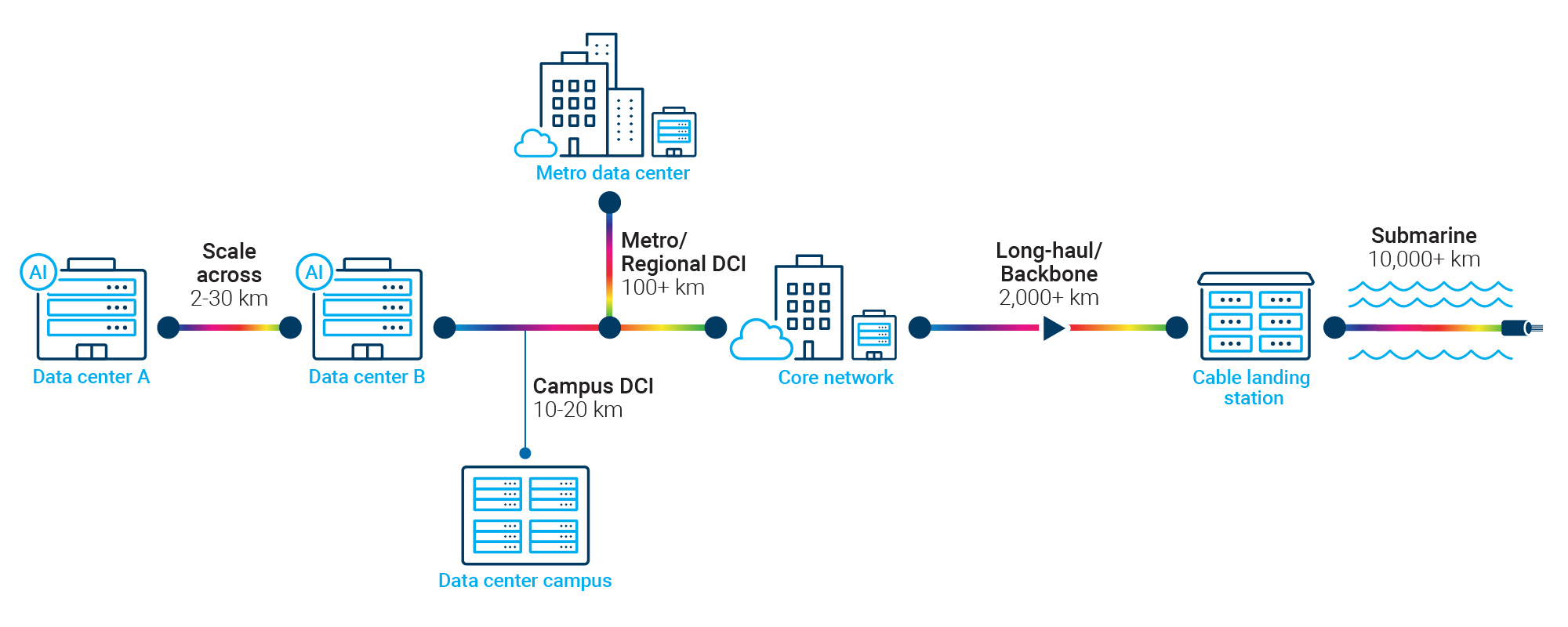
Connecting data centers within a campus
Key characteristics
- Latency-sensitive environment
- High fiber-count connectivity across multiple conduits
- 400G and 800G deployments today
- Migration toward 1.6T pluggable optics
Validation focus
- Fiber infrastructure qualification (ITU-T G.650.3)
- High-speed Ethernet service activation
- Latency and packet performance validation
- Rapid troubleshooting

High-capacity between AI training clusters
Key characteristics
- Massive east-west traffic flows
- Extreme bandwidth density requirements
- Low-latency back-end networks
- Accelerated migration to 800G and beyond
Validation focus
- End-to-end throughput validation
- High-density fiber verification
- Slicing validation
- Full fiber characterization (ITU-T G.650.3)
- Link performance benchmarking
- Rapid fault localization in large-scale fabrics
Regional and national-scale DCI transport
Key characteristics
- Multiple city-to-city corridors
- High fiber-count backbone routes
- Hundreds of fibers per route
- 400G and 800G coherent transport
- Planned evolution toward 1.6T wavelengths
Validation focus
- Slicing validation and full fiber characterization (ITU-T G.650.3)
- Coherent optics validation
- Optical spectrum and wavelength characterization
- Service turn-up and SLA verification
- Ongoing performance monitoring
- Rapid troubleshooting and fault isolation
Transoceanic and ultra-long-reach connectivity
Key characteristics
- Up to 24 fiber pairs per cable
- Longest-reach data center interconnects
- 200G-400G per wavelength
- 20-30 Tb/s per fiber pair
Validation focus
- Optical layer performance verification
- Coherent optics validation
- Commissioning and acceptance testing
- Capacity optimization
- Continuous performance assurance
- Rapid fault localization in case of a break
From fiber qualification to high-speed link activation
Qualify the state of the fiber, turn up and activate links, and assess data transmission integrity with EXFO’s comprehensive test portfolio. Our solutions validate high-speed transport networks end-to-end—from the physical to the protocol layer—with first-time right results, every time.
Fiber splice quality validation
As DCI networks continue to expand, new fiber routes and capacity upgrades require thousands of fiber splices to be completed accurately and consistently. Poor splice quality can introduce excessive loss and performance variability that may not be immediately apparent during deployment but can impact network reliability and future scalability.
Validating splice quality during construction is an important step to ensure fiber infrastructure is built to specification and capable of supporting high-speed services from day one. By identifying and correcting issues early, operators can reduce costly rework, accelerate project acceptance and establish a strong foundation for 400G, 800G and future 1.6T deployments.
Fiber characterization
As inter-data center bandwidth demand grows, new and leased dark fiber must be fully validated before service activation. Fiber characterization provides an end-to-end baseline of physical-layer performance using OLTS, OTDR, CD and PMD testing to confirm link quality and readiness. It identifies impairments such as loss, reflectance, bends or attenuation that can impact high-speed transmission and long-term reliability. This ensures certified infrastructure, reduces deployment risk, and accelerates turn-up for 400G, 800G and beyond.
High-speed link activation testing
Before a high-speed DCI link is placed into service, all optical components must be validated to ensure reliable operation. This includes transceiver qualification to verify optics and detect defects or performance issues early, followed by link activation testing to confirm end-to-end performance through BER, latency and jitter measurements. It also ensures interoperability between network elements and compliance with service requirements across 100G, 400G, 800G and emerging 1.6T networks, avoiding a costly “plug-and-pray” approach.
Service activation testing for DCI services
As organizations adopt DCI-as-a-Service and managed transport models, service activation testing ensures readiness and performance assurance at turn-up. It validates service behavior under different traffic types—including voice, video and data—with defined QoS and SLA requirements. High-speed links (100G, 400G, 800G) are also verified to ensure reliable transport between data centers, aggregation points and service hubs before production handover.
Identifying fiber degradations in live networks
Continuous, automated fiber monitoring enables rapid detection of degradations or disruptions in live networks, reducing mean-time-to-repair, minimizing downtime and preventing service impact. This is especially critical for high-bandwidth DCI links, where sustained link quality directly affects large-scale data movement between data centers and requires continuous validation to ensure performance and resilience.
In large-scale deployments, real-time visibility into fiber health is essential to quickly isolate faults and determine remediation actions. However, traditional remote fiber test approaches often fail to scale effectively, making them unsuitable for modern, high-capacity fiber networks.
Hollow core fiber validation
Hollow-core fiber (HCF) is an emerging technology that enables scale-across DCI connectivity by supporting longer distances between data centers while maintaining performance. By guiding light through air instead of glass, it delivers ultra-low latency and significantly reduced attenuation, enabling faster signal propagation and consistent high-performance transport over extended reaches.
As a fundamentally different transmission medium, HCF cannot be accurately validated using traditional fiber test methods, making proper qualification essential as adoption grows across high-performance and low-latency applications.
Measurable outcomes across DCI networks
Across AI-driven data center interconnects, metro aggregation layers, core transport systems, and long-haul infrastructure, network operators and hyperscalers report measurable gains in speed, reliability, and operational efficiency.
100% build traceability
Ensure full visibility across the fiber infrastructure, improving accountability and deployment accuracy.
<5% activation failure rate
Increase first-time-right deployments and reduce costly rework during service turn-up.
2x faster DCI deployments
Manage the high volume of ports at play, reducing test time and accelerating delivery at scale.
75% reduction in MTTR
Identify and localize faults faster, minimizing downtime and operational impact.
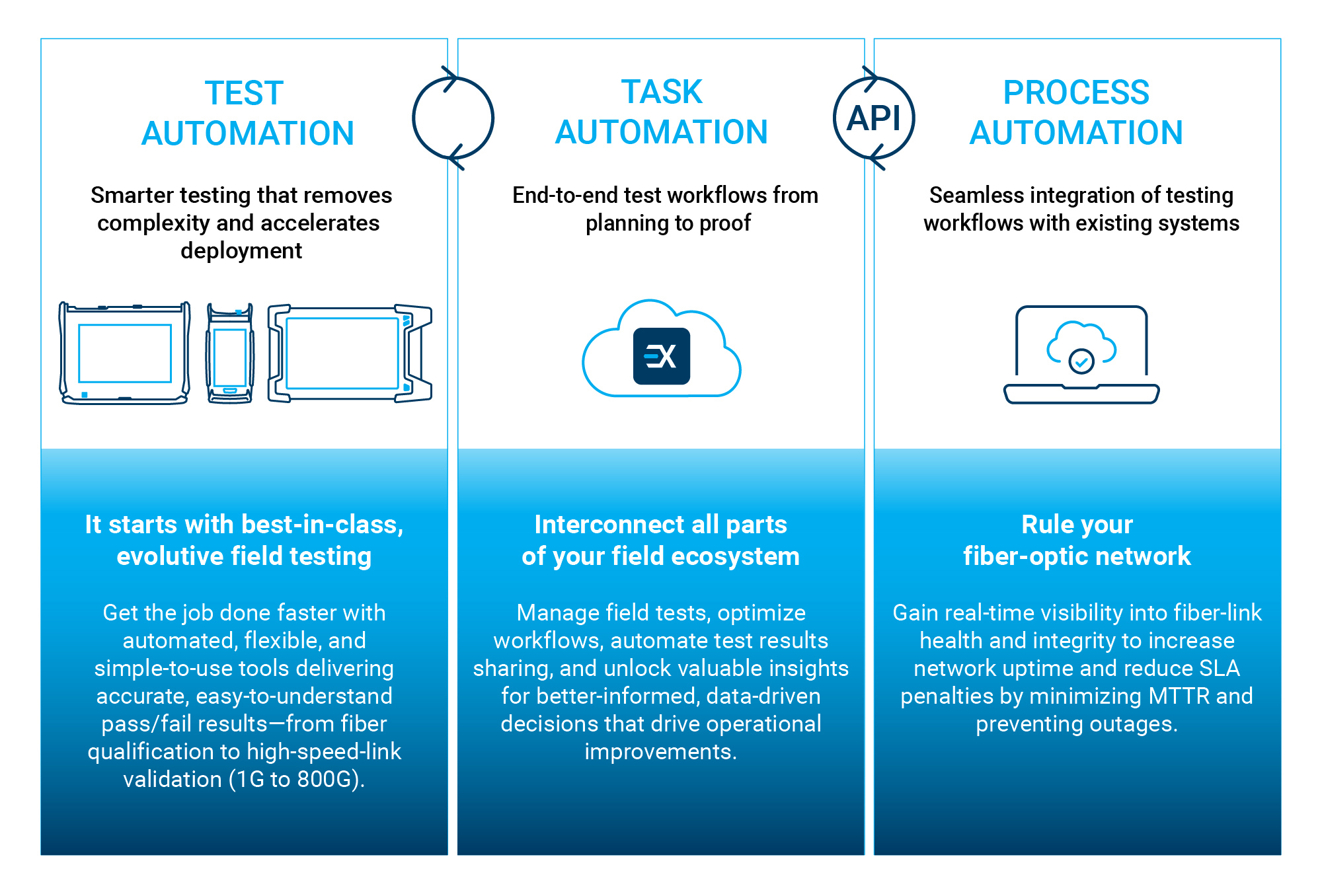
Where EXFO drives impact across the network lifecycle
EXFO supports every phase of the network—from fiber build and service activation to fiber monitoring and troubleshooting—through an integrated approach that delivers consistent, reliable performance at scale.
Protect your investment with premium support services
At EXFO, we are deeply committed to delivering service excellence to our customers. We understand the importance of precision and reliability, which is why we offer expert calibration, dependable repairs, and industry-leading warranties to keep your test instruments performing at their best.
Our services include :

Repairs (RMA)

Calibration services

Extended warranty

Customized service

Service centers
Related products
EXFO Exchange - sharing test results and ensuring compliance
EXFO Exchange is a cloud-based test results management solution that automates data collection, supports test compliance validation and enables real-time visibility, collaboration and reporting across field testing operations.
Hollow Core Fiber OTDR Test Kit
High dynamic range combined with high resolution for hollow core fiber characterization
HyperBlazer Series - 800G transceiver and network testing for data center and DCI
HyperBlazer is a portable 100GE–800GE test solution for data centers and DCI. Validate, reclaim, reuse QSFP-DD, OSFP, OSFP-RHS, coherent optics and cables with iOptics+, turn up DCI links with guided Ethernet Services, gain cloud visibility with EXFO Exchange.
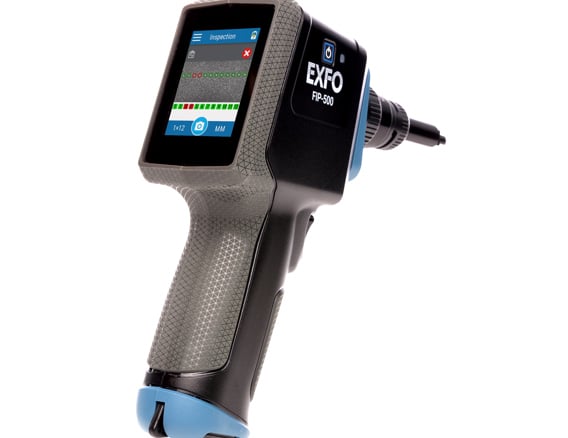
FIP-500 - Fiber inspection scope
FIP-500 is a fully automated fiber inspection scope that uses AI-driven endface analysis to inspect simplex, duplex and multi-fiber connectors. It enables zero-button testing with reliable, repeatable results and automatic data saving.
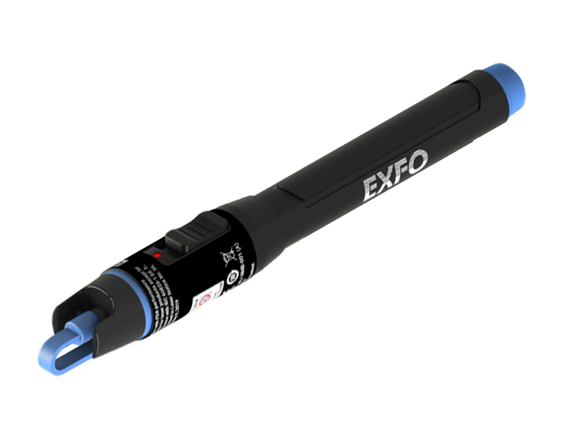
FLS-190 - High-power visual fault locator (VFL)
FLS-190 is a pocket-sized, high-power visual fault locator (VFL) that uses a 650 nm red laser to identify faults in optical fibers over distances of up to 12 km. It offers 5 mW output power and flashing or continuous operation modes.
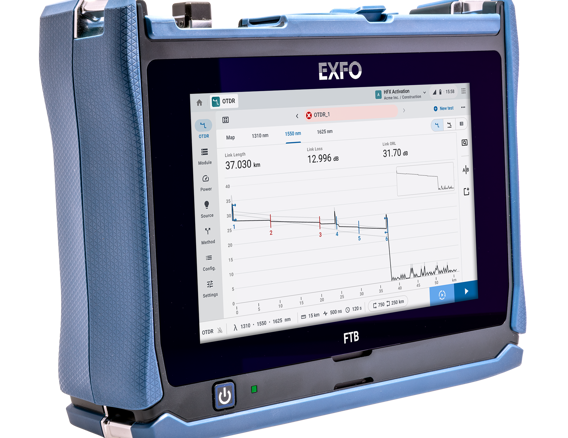
FTB Lite 750D - Connected metro/longhaul OTDR
Always-on connectivity and optimized usability for efficient, compliant and secure tests.
FTB Lite 975 - Simplex, duplex, multi-fiber bidir certifier
The EXFO FTB Lite 975 is a fully automated, always-connected fiber-optic certifier combining bidirectional Tier-1 OLTS testing and OTDR-ready capabilities in one compact device. Supports simplex, duplex and multi-fiber connectors up to 24 fibers.
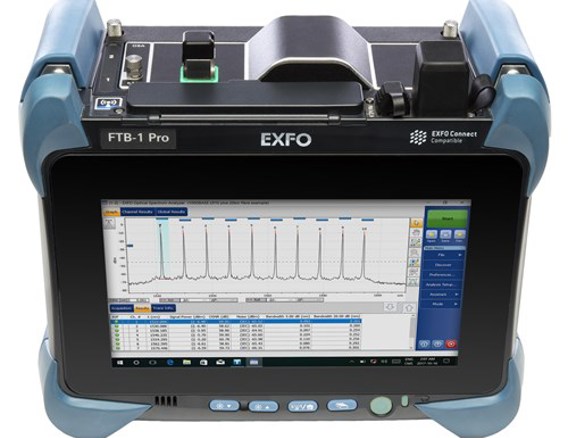
FTBx-5235 - Optical spectrum analyzer
FTBx-5235 is a compact, portable optical spectrum analyzer (OSA) that measures channel power and wavelength, characterizes Remote PHY deployments, and performs spectral analysis of DWDM networks.
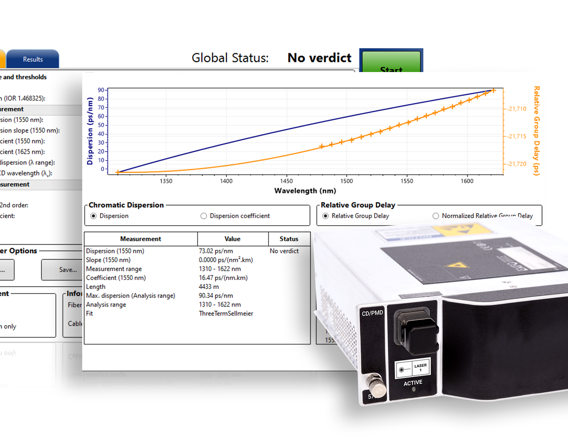
FTBx-570 - Single-ended dispersion analyzer
FTBx-570 is a single-ended dispersion analyzer that measures chromatic dispersion (CD) and polarization mode dispersion (PMD) on optical fiber links. It delivers CD/PMD results in under 30 seconds, testing multiple links from one location.
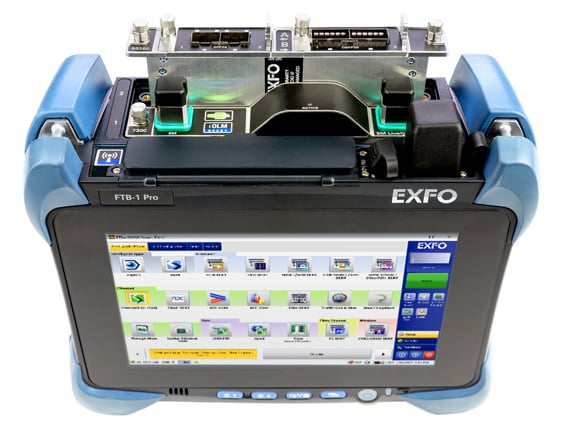
FTBx-88260 - 10M to 100G network tester
FTBx-88260 is a customizable 10M-to-100G network tester with 100ZR coherent support and multi-interface flexibility through EXFO’s Open Transceiver System (OTS).
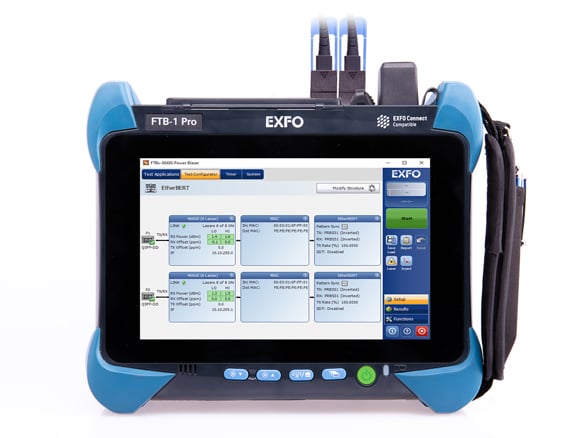
FTBx-88480 Series - dual-port 1G-400G, 800G-ready testers
FTBx-88480 Series provides compact, multiservice dual-port testing for 1G-400G, 400ZR and 400ZR+, enabling two circuits to be validated simultaneously. Includes EXFO’s modular Open Transceiver System (OTS) and is software upgradeable to 800G.
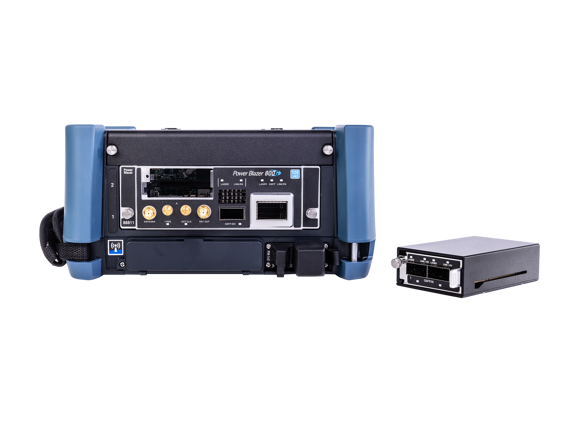
FTBx-88810 Series - complete lab-to-field testing, 1G-800G and 800ZR
FTBx-88810 Series is an 800G test solution with full-rate 1G-to-800G coverage for Ethernet, OTN and Fibre Channel, plus coherent optics testing including 800ZR.
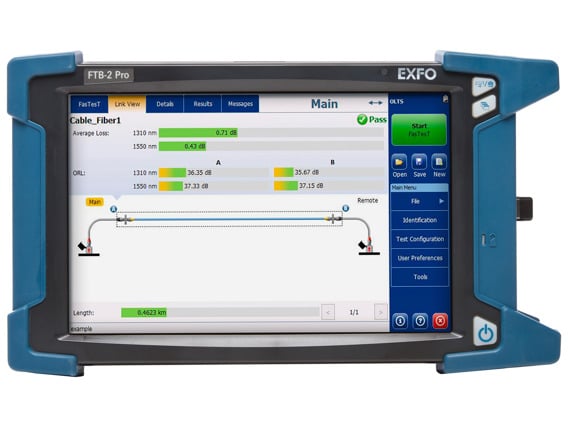
FTBx-945 Telco OLTS
FTBx-945 Telco OLTS is a multifunction optical loss test set for EXFO's FTB-2 and FTB-2 PRO platforms. Its FasTesT™ technology automates bidirectional fiber testing at two wavelengths in under 5 seconds.
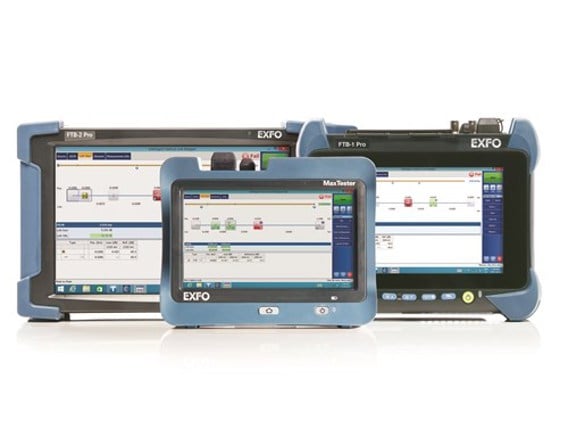
iOLM - intelligent Optical Link Mapper
iOLM (intelligent Optical Link Mapper) is an OTDR-based software application that automates singlemode and multimode fiber testing, using multipulse acquisitions and advanced algorithms to analyze fiber links and diagnose faults.
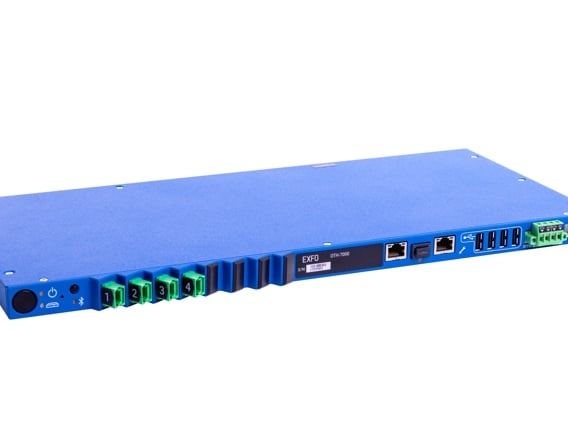
OTH-7000 - Optical test head
OTH-7000 is a compact, OTDR-based optical test head for remote fiber network monitoring and troubleshooting. It supports up to 512 ports and integrates with third-party SDN controllers and OSS solutions.
EXFO RFTM - Remote Fiber Testing and Monitoring
EXFO RFTM is a cloud-native, OTDR-based solution for automated remote fiber testing and monitoring of P2P and PON links. It supports network buildout and maintenance, with integrated iOLM technology for expert-level fault diagnosis and analysis.
Resources
More resources and languagesLanguage
Resource type