

Search results

This educational webinar will cover the basics of testing and troubleshooting fiber optics with a focus on critical parameters for standard singlemode fiber. Join speaker Kevin Peres as he walks you through the fundamentals (e.g., understanding optical return loss) to tackle more advanced subjects such as identifying and locating fiber-related faults with an OTDR that leverages iOLM technology. Connectors and their impact on network health will also be covered. Key takeaways: Fiber 101 Splice and connector critical parameters OTDR/iOLM setup Trace interpretation and advanced troubleshooting
Resources
With the introduction of 5G, NFV, SD-WAN, operators are looking for more precise and accurate tools to ensure carrier-grade performance. The working group of the Internet Engineering Task Force (IETF) on IP Performance and Metrics has developed the RFC-5357 called Two-Way Active Measurement Protocol (TWAMP). The TWAMP protocol is a standards-based and highly effective performance monitoring process that expands upon the One-Way Active Measurement Protocol (OWAMP) specification with the addition of the performance measurement of round-trip and two-way metrics for IP-based networks. Is TWAMP capable of bringing value for existing and future network deployment? Can it gather accurate performance statistics that truly reflect the end-to-end performance of any IP service? This webinar will walk you through the TWAMP test and explore various use cases of real-time active monitoring using TWAMP. Important threshold metrics and requirements will also be discussed. Key takeaways: How TWAMP can be used to monitor end-to-end performance How TWAMP testing brings value to your virtualization How TWAMP testing can help find and fix intermittent problems
Resources
In Part I, we covered the different types of WDM technologies and the key parameters to be controlled and measured everywhere on the network—from the backhaul to the fronthaul. In many situations, simply running more backhaul and fronthaul fiber cables in conduits or strung overhead is not economically feasible, due to labor costs and outside plant capital costs. It is possible to use hub and cell site link aggregation routers to relieve this “fiber exhaustion” bandwidth pressure, but single/dual wavelength approaches are not ultimately scalable, with the 5G 3GPP roadmap laying out bandwidth-intensive options such as FR2 mmWave, massive MIMO and Coordinated Multi-Point (CoMP). The most scalable and cost-effective options for 5G carriers are different forms of wavelength division multiplexing (WDM). Key takeaways: Various WDM options and advantages of WDM in 5G optical access networks Recent component technology innovations that promise to radically change carrier economics of DWDM
Resources
The increasing demand for anytime, anywhere connectivity is stretching network bandwidth limits and the fiber network must be ready to support this greater density of information. In recent years, fiber optic transmitter technology has evolved, pushing the boundaries of the impossible to the possible via smaller, faster, cheaper transceivers. But what about the fiber itself? Is the bandwidth that fiber can support infinite? The obvious answer is “no”. In fact, even singlemode fiber has significant limitations in the form of dispersion, namely chromatic dispersion (CD) and polarization mode dispersion (PMD) and induced nonlinear effects (NLE). This webinar will equip you with the much-needed insight for making more informed decisions on when to test CD and PMD. Key takeaways: Understanding the nature and effects of CD, PMD and NLE through graphical interpretation Best practices for complete fiber characterization, with focus on CD and PMD Understanding the impact of CD and PMD on next-generation transceivers throughout the network
Resources
Understanding and testing Remote-PHY and DOCSIS 3.1 Remote PHY (R-PHY) is a key transformation towards next-generation gigabit networks. CATV and multiple-system operators (MSOs) are prepping their networks to support DOCSIS 3.1 and eventually FTTH/EPON. These rollouts push fiber ever deeper and closer to subscribers to ensure a better quality of experience. This educational webinar will focus on the deployment of DOCSIS 3.1 using the Remote PHY DAA architecture. The 45-minute session will cover various aspects of deployment starting with an overview of DOCSIS 3.1 and explaining why R-PHY is the preferred technology. The webinar will also cover the best practices in testing fiber, DWDM and services including synchronization. Key takeaways: DOCSIS 3.1 basics The advantage of the R-PHY DAA architecture Best practices for testing
Resources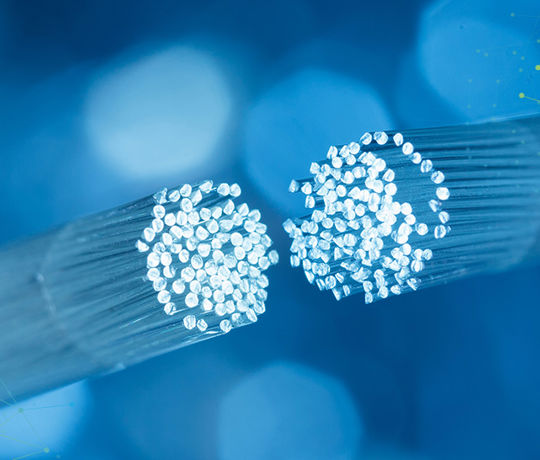
With the current situation you will probably ask yourself if your tools are clean upon return to work and with reason. As contamination is more than ever part of our reality it brings the question: Is fiber cleaning and inspection really that important? Is it worth your time? Isn’t connector cleaning overrated? You may have asked yourself these questions already or heard them being discussed by team members. And, you may be surprised to know that a large percentage of the issues in your network are indeed caused by dirty connectors. If you are looking to learn more about connector inspection and cleaning, and convince your field technicians or colleagues about the benefits, this webinar is for you. Key takeaways: The impact and necessity to validate connectors Best cleaning practices Tools, including the ConnectorMax 2 Software Inspection criteria and standards Using the probe Hands-on demo Conclusion
ResourcesWith the densification of data everywhere in the network (backbone, backhaul, middle-haul and fronthaul), using one fiber per service is not the best use of resources. Multiplexing multiple services through the same fiber is more efficient in transporting data from point A to point B, while providing a sustainable and evolutive path moving forward. Key takeaways: The current array of WDM technologies Key xWDM signal parameters that require testing Stay tuned for Part II which will cover WDM applications in 5G optical access networks.
Resources
When it comes to CATV technology, the road to 10G brings unprecedented challenges. To prepare for near-future applications, multiple system operators (MSO) have to push their network to the next frontier with maintenance teams that are trained only for RF/coax support. That’s not all; network equipment vendors have 25 GB/s in sight, meaning more operational complexity and capital expenditures. To add to these challenges, CableLabs launched DOCSIS 4.0 including FDX, ESD and ultra-low latency. More technologies in the mix. MSOs need to make these upgrades while simultaneously maintaining an already highly complex network for bandwidth-thirsty subscribers. MSOs must break the silos within their own organization to manage various types or architectures, forcing them to find new ways to be more efficient. For example, the maintenance teams must now deal with several architectures, new fiber technologies and P2MP fiber links. In this webinar, Ovum explores current trends on network complexity and densification, upcoming deployments and challenges on the road to 10G. EXFO will discuss how to handle increasing network complexity and how to future-proof networks. Key takeaways: MSO market trends on network densification Update on current deployments Key 10G challenges and recommendations to overcome them Handling network complexification Future-proofing the network from construction to troubleshooting CATV 10G as an enabler for 5G
Resources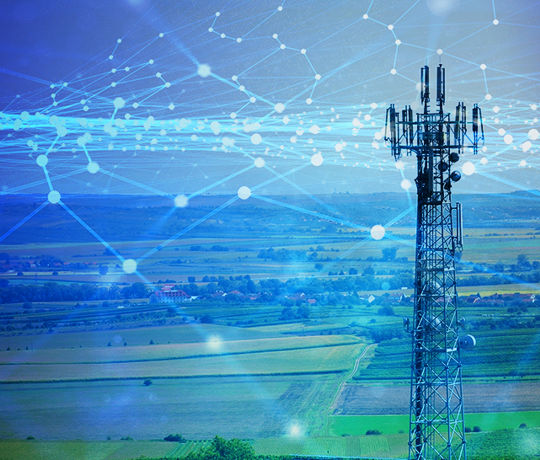
With the many disruptions COVID-19 posed to our daily routines and the way we do business, the increased demand for connectivity is pressing service providers to ensure quality network access to their subscribers. Notions of “normal” network behavior with capacity and performance expectations during “busy hours” or in “traffic centers” have all been disrupted, highlighting the need for change in the way operators manage networks. Moreover, the need to virtualize networks while deploying new 5G use cases with stringent SLAs magnify the complexity of assuring the quality of experience delivered to customers on existing and future networks. In this webinar we will discuss how an Adaptive Service Assurance approach through real-time analytics, end-to-end monitoring (RAN to Core), ML/AI automation, and a multidomain smart data collection and processing would allow rural operators to swiftly adapt to the rapid rate of technological change, growing customer expectations, and budget constraints in a competitive market. Key takeaways: Actionable Insights: Maximizing the benefits from your existing investment in service assurance Smart Monitoring: probe-less, probe-based and on-demand data capture Convergence: Conglomeration of Active and Passive monitoring E2E: Multi-domain service assurance (RAN / Core / Transport) Power of AI/ML: Embedding telecom expertise in an AI/ML-powered service assurance solution
Resources
Vous souhaitez en savoir plus sur les solutions offertes par le FTTx pour les entreprises? Nouvelles offres et technologies, méthodes d'installation et de test, success stories? Ce webinaire est fait pour vous! 9h30 : Introduction, présentation de BICSI - Gautier HUMBERT, Président de BICSI Europe Occidentale 9h40 : La pérennité du FTTH - Philippe FOUET, Directeur Technique, Cercle CREDO 9h55 : Le POL (Passive Optical LAN) ou les bénéfices de l’architecture FTTH au sein des bâtiments intelligents - Remy DOLECKI, DC / IBN Sales Manager France & Switzerland, CORNING 10h30 : Introduction au FTTO et retour d’expérience Waycom - Géraud DANZEL D'AUMONT, Sales Manager Western Europe, NEXANS Advanced Networking Solutions 11h05 : Pause pour les participants - 5 minutes 11h10 : Optical LAN, a better way to structure the network - Hervé GAUDILLAT, Fixed Networks Business Development, NOKIA 11h45 : Limite de la mesure en réflectométrie classique : Comment augmenter la fiabilité des mesures pour les clients FTTE ? - Romain LEMOINE, Channel Manager, EXFO 12h20 : Le mot de la fin - Thierry BESREST, Président de BICSI France
Resources