


Search results

Did you know that today’s bandwidth boom (400G rollouts, the advent of 5G or the sprawl of data centers) is mainly driven by integrated photonics? This disruptive technology has been picking up pace over the past few years in telecom applications mainly, but also in medical, sensing or military sectors. Often compared to the groundbreaking electronic processor, photonic integrated circuits (PIC) are similarly imprinted onto wafers before being cut into individual chips. The PIC can combine many functions: purely optical as well as opto-electronical, electro-optical or fully electronic, hence offering the best of optics and electronics. Testing such complex components can be challenging due to their multiple functionalities, the large number of devices being produced per wafer and the mix of active and passive component present on each device. The fundamental characteristic of an optical component is its spectrum (i.e., the power variations from or through the device). Testing it is called parametric testing. This is often performed at an early stage in the life of the component to avoid producing defective devices. In this webinar, we will see how to perform parametric tests on PICs while they are still on wafer. We will also discuss which method is best suited to each type of PIC. Finally, we will see how T&M vendors are addressing this new challenge. Key takeaways: Back to basics: what is parametric testing and why is it important? Challenges faced today by PIC manufacturers and T&M vendors Discover: new solutions to characterize PICs
Resources
If we look into successful 5G launches, certain principles can be identified. These principles underpin the shift in deployment and operational practices mandated by 5G. Indeed, for 5G to be successful, there is a need for radical change in our thinking, similar to the philosophical revolution in the ancient world. But how much can the “birth” of 5G have in common with the “birth” of philosophy? How much can the thinking behind dealing with 5G challenges reflect the philosophical ideas posited by groundbreaking thinkers hundreds of years ago? And what does that actually mean in practice for the network operators who have launched or are planning to launch 5G? Attend this webinar and learn: What the key challenges are in preparing for and launching 5G, from network virtualization to automation How to deal with 5G challenges, including five main principles and philosophical parallels What 5G network operators can achieve in practice following these principles This webinar is based on EXFO’s service assurance experience with leading mobile network operators worldwide. Join us for a lively discussion on addressing 5G challenges, and take the opportunity to ask questions during the Q&A session.
Resources
This webinar is in German. Der FTTH (Fiber to the Home)-Ausbau in Deutschland ist eines der heißesten Themen der nächsten Jahre. Dies ist bedingt durch den gesteigerten Bandbreitenbedarf der Haushalte, sei es für Smart TVs, Video/OTT-Streaming, Unterstützung von Multi-Screens oder den Betrieb eines Unternehmens. Dieser FTTH-Ausbau bringt neue Herausforderungen und Probleme mit sich, die sich während des Baus, der Aktivierung und der Wartung dieser Netze ergeben. Da der massive Ausbau gerade erst beginnt, wird dieses Webinar die Grundlagen über Glasfaser bis ins Haus erklären. Thematisiert wird auch, welche Herausforderungen Netzbetreiber und Installateure meistern müssen und wir geben Tipps, wie jeder Kleinbetrieb an diesem Rollout teilhaben und vor allem Geld verdienen kann. Achten Sie auf Ihren Posteingang, um weitere Informationen zu den nächsten beiden Webinaren der Reihe zu erhalten. Die weiteren Webinare werden Lösungen für das effiziente Messen im Feld behandeln, einschließlich EXFO's TestFlow und Best Practices zur Fehlerbehebung.
Resources
From end-to-end network performance and service quality visibility to network virtualization and automated assurance, operational topics have been the focus of many discussions about mobile networks in recent years. But no interesting topic should turn our attention away from flawed management attitudes that have impacted on the performance of 4G network operations teams. If overlooked, these attitudes may also negatively affect the success of 5G. Fortunately, it is possible to identify what should be avoided and to outline the norm in network operations. Attend this webinar and learn about: The essential and evolving role of network operations in 4G/5G Seven detrimental attitudes (sins) that impact on 4G network operations and could also affect 5G Key proven ways (best practices) to enhance mobile network operations today This webinar is based on the EXFO service assurance experience with leading mobile network operators worldwide. Join us for a lively discussion on an exciting topic, and take the opportunity to ask questions during the Q&A session at the end of the webinar.
Resources
In this exclusive webinar, tag along as we share real-world 5G installation scenarios. Get invaluable information about the key challenges and testing considerations to consider when planning your 5G network. Discover strategies that will enable you to accelerate your 5G rollout while maximizing ROI. Join us and become better prepared as you journey to deliver the full promise of 5G. What you will learn: Where are we at with 5G? 5G vs. 4G ecosystem―demystifying 5G technologies and requirements Why installation and maintenance of the fiber optic network is critical for the success of 5G transport 5G testing challenges: how to efficiently manage and maintain 5G rollouts and deliver the stringent QoS performance results required (e.g., timing and synchronization, latency, reliability)
Resources
In the coming years, distributed access architecture and fiber deep trends such as Remote PHY and Remote MAC PHY will greatly transform hybrid fiber coax networks. Remote PHY promises greater capacity for end users, thanks to fiber that will reach deeper into networks (i.e., closer to the end user). Putting so much information on an access network creates new potential issues, some of which are well known (fiber attenuation, dirty connectors, etc.), while others are underestimated. In this webinar, we will discuss two little-known challenges of Remote PHY deployments that can lead to errors in transmission: dispersion—namely, chromatic dispersion and polarization mode dispersion—and protocol layer issues (Ethernet). We will explain these challenges, examine how they can be tested and reveal how they can be overcome. This webinar will also cover Remote PHY testing best practices. Webinar attendees will learn: Why dispersion testing should be included in the Remote PHY deployment procedure How to validate if transceivers being used for Remote PHY are ready for the turnup sequence (SFP, SFP+, QSFP28, QSFPDD.) The fastest ways to determine if a Remote PHY Ethernet circuit is ready to go live
Resources
This webinar shows how Amdocs and EXFO partnered to support service activation testing, ongoing performance monitoring and ad hoc testing and troubleshooting capabilities, as part of Amdocs' highly automated fulfillment and operations solutions. Get actionable insights into how to pave the way for cost-sensitive applications like FWA for residential broadband.
Resources
Overview 5G network evolution – from distributed to centralized and virtualized RANs – is driving more stringent transport and protocol requirements for latency, synchronization, quality of service (QoS) and other criteria, forcing operators to rethink their fronthaul strategy to meet these challenges. Join this webinar to get answers to these questions: How is Ethernet evolving to address new requirements? What role do Time Sensitive Networking (TSN) and network slicing play in this service environment? How can Ethernet be made deterministic to support fronthaul and converged 4G and 5G traffic? How are standards, such as eCPRI and O-RAN, shaping the landscape? How can operators devise a test and integration strategy for 5G fronthaul? Who Should Attend Fixed and mobile operators (‘transmission and transport’ divisions in particular); equipment vendors and systems integrators; financial analysts and industry press. Free Report Everyone who registers for this webinar will receive a special report by Director, Research and Analysis Richard Webb. A download link will be sent to you and the report will also be available to download from the live webinar console. Key Topics for Discussion Why Ethernet for 5G fronthaul: Spectrum, protocols, RAN architectures Standardization trends: RoE, eCPRI, O-RAN Transport network slicing within a shared TSN fronthaul network: Fronthaul as a service Timing and synchronization considerations for 5G fronthaul Test, validation, and qualification of the transport network at system/subsystem level Answers to audience questions during live Q&A Speakers Richard Webb, Director, Research and Analysis, Service Provider Technology, Omdia Sébastien Prieur, Product Line Manager, EXFO Jean Dassonville, RAN Solutions Planner, Keysight Technologies Jason Wiebe, Product Line Manager, IP/Optical Networks Business Group, Nokia Allen Tatara, Senior Manager, Webinar Events, Omdia (Moderator)
Resources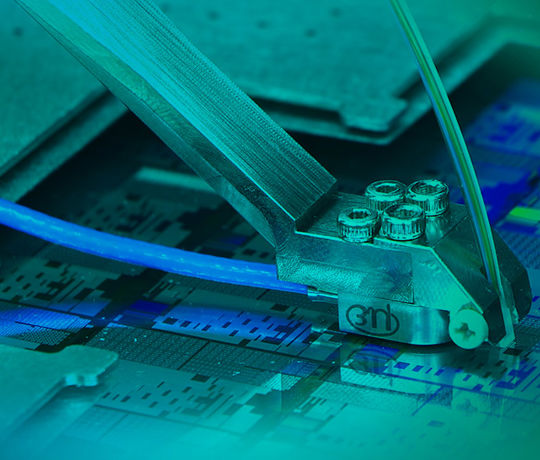
Optical testing at the wafer level is currently a major bottleneck in component manufacturing due to tighter tolerances in optical testing compared to electrical testing, accounting for 80 percent of the test and assembly cost of the final product. Three industry innovators – EXFO, Hewlett Packard Enterprise (HPE) and MPI Corporation – have combined forces to address the challenges posed by optical component testing with advanced, interoperable measurement techniques. In this webinar, you will discover how the collaborative EXFO, HPE, and MPI PIC testing solution addresses market challenges, making wafer testing faster, scalable, and more reliable, ultimately improving speed-to-market for component manufacturers. This topic shines a light on photonic wafers as critical building blocks for next-generation networks, laying the groundwork for 5G deployment and high-speed data centers. Lawrence Van der Vegt - Subject Matter Expert @ EXFO Lawrence is an optics veteran; he earned his Bachelors degree in Electrical and Computer Engineering in the Netherlands and has held various key Directorial positions at optical T&M companies in the Netherlands and the U.S.A. He is currently active as a Subject Matter Expert on behalf of EXFO, involved in passive and active component testing driven by PIC technologies. Ashkan Seyedi - Senior Research Scientist @ HPE Ashkan received a dual Bachelor's degree in Electrical and Computer Engineering from the University of Missouri-Columbia and a Ph.D. from the University of Southern California working on photonic crystal devices, high-speed nanowire photodetectors, efficient white LEDs and solar cells. While at Hewlett Packard Enterprise as a research scientist, he has been working on developing high-bandwidth, efficient optical interconnects for exascale and high performance computing applications. Sebastian Giessmann - Product Marketing Manager @ MPI Corporation Sebastian received his degree in Electrical Engineering from the Dresden University of Applied Science. He has held various positions in R&D, application support and product management in the semiconductor test industry. Currently he is responsible for probe systems product marketing at MPI Corporation and with specialization in silicon photonics testing.
Resources
You may have heard a lot about 5G already. You may know which network operators have launched or will soon be launching 5G, which services they have prioritized for their initial 5G rollout and even which challenges they have faced. But do you know which use cases 5G is realistically expected to support in the future, say, by 2025? Or how it will be possible for 5G to deliver on its multifaceted promise by then? Key takeaways: What 5G is (now) and will be (by 2025) about Which 5G use cases are likely to change our world by 2025 (maybe autonomous vehicles, maybe not…) Which near- and long-term 5G network challenges worry operators the most and why, from specific domains (e.g., radio access) to end-to-end network slicing What is needed to ensure that 5G fully delivers by 2025, if not earlier, and what can be done starting today The webinar is based on extensive mobile industry experience, 5G project engagements and insights from network operators. Join us for an in-depth and thought-provoking discussion on the 5G outlook and success prerequisites, ask questions during the Q&A session and get ready for 2025!
Resources