


Search results

In the coming years, distributed access architecture and fiber deep trends such as Remote PHY and Remote MAC PHY will greatly transform hybrid fiber coax networks. Remote PHY promises greater capacity for end users, thanks to fiber that will reach deeper into networks (i.e., closer to the end user). Putting so much information on an access network creates new potential issues, some of which are well known (fiber attenuation, dirty connectors, etc.), while others are underestimated. In this webinar, we will discuss two little-known challenges of Remote PHY deployments that can lead to errors in transmission: dispersion—namely, chromatic dispersion and polarization mode dispersion—and protocol layer issues (Ethernet). We will explain these challenges, examine how they can be tested and reveal how they can be overcome. This webinar will also cover Remote PHY testing best practices. Webinar attendees will learn: Why dispersion testing should be included in the Remote PHY deployment procedure How to validate if transceivers being used for Remote PHY are ready for the turnup sequence (SFP, SFP+, QSFP28, QSFPDD.) The fastest ways to determine if a Remote PHY Ethernet circuit is ready to go live
Resources
This webinar shows how Amdocs and EXFO partnered to support service activation testing, ongoing performance monitoring and ad hoc testing and troubleshooting capabilities, as part of Amdocs' highly automated fulfillment and operations solutions. Get actionable insights into how to pave the way for cost-sensitive applications like FWA for residential broadband.
Resources
Overview 5G network evolution – from distributed to centralized and virtualized RANs – is driving more stringent transport and protocol requirements for latency, synchronization, quality of service (QoS) and other criteria, forcing operators to rethink their fronthaul strategy to meet these challenges. Join this webinar to get answers to these questions: How is Ethernet evolving to address new requirements? What role do Time Sensitive Networking (TSN) and network slicing play in this service environment? How can Ethernet be made deterministic to support fronthaul and converged 4G and 5G traffic? How are standards, such as eCPRI and O-RAN, shaping the landscape? How can operators devise a test and integration strategy for 5G fronthaul? Who Should Attend Fixed and mobile operators (‘transmission and transport’ divisions in particular); equipment vendors and systems integrators; financial analysts and industry press. Free Report Everyone who registers for this webinar will receive a special report by Director, Research and Analysis Richard Webb. A download link will be sent to you and the report will also be available to download from the live webinar console. Key Topics for Discussion Why Ethernet for 5G fronthaul: Spectrum, protocols, RAN architectures Standardization trends: RoE, eCPRI, O-RAN Transport network slicing within a shared TSN fronthaul network: Fronthaul as a service Timing and synchronization considerations for 5G fronthaul Test, validation, and qualification of the transport network at system/subsystem level Answers to audience questions during live Q&A Speakers Richard Webb, Director, Research and Analysis, Service Provider Technology, Omdia Sébastien Prieur, Product Line Manager, EXFO Jean Dassonville, RAN Solutions Planner, Keysight Technologies Jason Wiebe, Product Line Manager, IP/Optical Networks Business Group, Nokia Allen Tatara, Senior Manager, Webinar Events, Omdia (Moderator)
Resources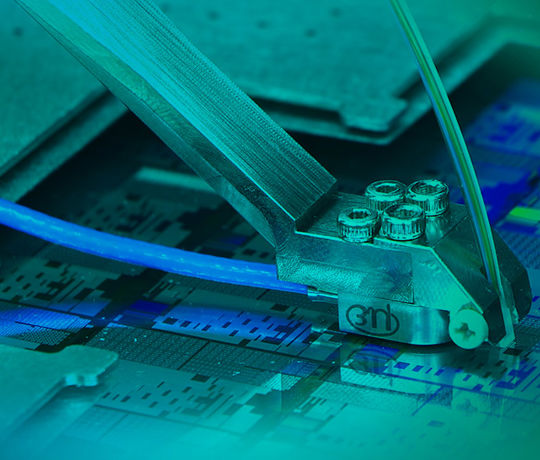
Optical testing at the wafer level is currently a major bottleneck in component manufacturing due to tighter tolerances in optical testing compared to electrical testing, accounting for 80 percent of the test and assembly cost of the final product. Three industry innovators – EXFO, Hewlett Packard Enterprise (HPE) and MPI Corporation – have combined forces to address the challenges posed by optical component testing with advanced, interoperable measurement techniques. In this webinar, you will discover how the collaborative EXFO, HPE, and MPI PIC testing solution addresses market challenges, making wafer testing faster, scalable, and more reliable, ultimately improving speed-to-market for component manufacturers. This topic shines a light on photonic wafers as critical building blocks for next-generation networks, laying the groundwork for 5G deployment and high-speed data centers. Lawrence Van der Vegt - Subject Matter Expert @ EXFO Lawrence is an optics veteran; he earned his Bachelors degree in Electrical and Computer Engineering in the Netherlands and has held various key Directorial positions at optical T&M companies in the Netherlands and the U.S.A. He is currently active as a Subject Matter Expert on behalf of EXFO, involved in passive and active component testing driven by PIC technologies. Ashkan Seyedi - Senior Research Scientist @ HPE Ashkan received a dual Bachelor's degree in Electrical and Computer Engineering from the University of Missouri-Columbia and a Ph.D. from the University of Southern California working on photonic crystal devices, high-speed nanowire photodetectors, efficient white LEDs and solar cells. While at Hewlett Packard Enterprise as a research scientist, he has been working on developing high-bandwidth, efficient optical interconnects for exascale and high performance computing applications. Sebastian Giessmann - Product Marketing Manager @ MPI Corporation Sebastian received his degree in Electrical Engineering from the Dresden University of Applied Science. He has held various positions in R&D, application support and product management in the semiconductor test industry. Currently he is responsible for probe systems product marketing at MPI Corporation and with specialization in silicon photonics testing.
Resources
You may have heard a lot about 5G already. You may know which network operators have launched or will soon be launching 5G, which services they have prioritized for their initial 5G rollout and even which challenges they have faced. But do you know which use cases 5G is realistically expected to support in the future, say, by 2025? Or how it will be possible for 5G to deliver on its multifaceted promise by then? Key takeaways: What 5G is (now) and will be (by 2025) about Which 5G use cases are likely to change our world by 2025 (maybe autonomous vehicles, maybe not…) Which near- and long-term 5G network challenges worry operators the most and why, from specific domains (e.g., radio access) to end-to-end network slicing What is needed to ensure that 5G fully delivers by 2025, if not earlier, and what can be done starting today The webinar is based on extensive mobile industry experience, 5G project engagements and insights from network operators. Join us for an in-depth and thought-provoking discussion on the 5G outlook and success prerequisites, ask questions during the Q&A session and get ready for 2025!
Resources
Evolving network requirements are driving an expansion of use cases that can benefit from coherent optical technology. This is ushering in a new era of pluggable coherent optical technology with 100 – 400Gb/s capacity, support for various interoperable transport standards and a wide variety of client payloads. At the same time, the options for pluggable client optical transceivers are also broadening with respect to form factor, client rates and types. At the nexus of these trends are transport and router platforms utilizing both client pluggable optics and coherent pluggable optics to support a range of different applications. These systems will leverage the capabilities of this new generation of multi-rate coherent pluggables to enable features like modularity, pay-as-you-grow, interoperability and flexibility. In this webinar, we explore: Some of the challenges posed in realizing these coherent pluggables and where they will be used in networks How these new pluggable coherent optics will coexist in the network alongside common client interface pluggables How validation and testing of end-to end client traffic will be managed The need for proper test tools to ensure efficient deployment in networks Who should attend? Network operators, data center operators, equipment manufacturers, component manufacturers and others looking to gain insight into the applications for pluggable coherent optical technology, the innovation behind them and how traffic testing and validation will be managed in networks with these new solutions.
Resources
Within a data center environment, a cross connect cabling plant offers a variety of benefits. Most importantly it involves a dedicated patching area that makes moves, adds and changes easier to manage. The patching area isolates mission critical active equipment, so there is less risk of disrupting live circuits while servicing the patch panels. Additionally, cross connects to carriers and cloud providers can also save money, improve reliability, and add versatility to their network. Cross connects require more cabling, and as such, the proliferation of patch cords in a cross connect topology becomes a critical concern. As fiber counts rise, a good cable management strategy is imperative. At the same time, during the installation of the cable management system and throughout its life cycle, it is important to follow testing best practices to ensure everything is working as planned and avoid costly reworks. In this webinar, EXFO and CommScope join forces to discuss the latest trends in cross connect cabling for data center architectures, as well as testing and troubleshooting best practices to improve efficiency—making expansion and upgrades faster and more reliable. Key takeaways: Cross connect cabling benefits Characteristics of cable management systems Best practices to ensure first-time-right deployments Testing & troubleshooting techniques
Resources
Photonic integrated circuits (PIC) are the technology currently deployed to tackle the bandwidth stress taking place in the transceiver industry. This stress is due to ever-increasing performance demands and costs pressures experienced by data centers and 5G applications. Transceiver vendors need to test and churn out thousands of transceivers per day. To save time during the manufacturing process, while guaranteeing quality, testing solutions must be both extremely fast and reliable. EXFO’s unique end-to-end transceiver testing solution enables the characterization of transceivers on the electrical-side, client-side and optical-side of manufactured units. This webcast reviews the current challenges and testing best-practices when designing, manufacturing and validating PIC-based transceivers from 25G to 400G. Key takeaways: What are the current challenges of testing and validating PIC-based transceivers? What are the various compliance tests required for next-gen transceivers, from single components to packaged product? What solutions does EXFO offer to optimize transceiver qualification?
Resources
In order to successfully deliver 5G services, service providers must ensure proper radio frequency (RF) signal quality throughout their networks. To maintain high RF-signal quality, interference-causing sources on the 4G network must be quickly and easily identified. But why is 5G so heavily dependent on 4G network architecture in the first place? And how can RF-signal problems be easily found and solved? Join us for this training workshop where we’ll discuss the relationship between 4G and 5G networks as well as provide an overview of EXFO’s Intelligent OpticalRF (iORF). An intelligent solution for RF spectrum analysis over CPRI, iORF enables operators to remove the complexity from RF interference and PIM analysis, putting the power back in the hands of field technicians, regardless of the depth of their experience–and enabling mobile network operators to save time and money in diagnosing RF interference issues. Key topics for discussion during this webinar: How does RF interference affect your network What role does radio frequency (RF) spectrum analysis over CPRI play in a 5G world Learn how RF spectrum analysis over CPRI can be easy and automated with EXFO's iORF
Resources
With the evolution of the technologies deployed in the field over past years (e.g., Remote-PHY, 5G, C-RAN, Remote-OLT, 10G to the business), distribution networks are being put under a lot of stress. To increase the efficiency and the density of data, wavelength division multiplexing (WDM) has always been the most optimal solution. It started with CWDM and 18 channels, but now DWDM is more common in the industry. The 100 GHz version that is deployed provides the capability of 44 channels of 10 Gbit/s (25/50 Gbit/s soon). In some cases, this is over a terabit travelling per second through one fiber strand in the distribution/access network. Under such circumstances, we cannot simply plug and pray, hoping for the best. We need to make sure that every connector, splice, MUX, DEMUX are tested using the appropriate wavelengths and correct colored transceiver TX is received at the proper level on the RX side. When a DWDM is half full it is hard to troubleshoot with legacy test equipment and obviously we cannot disconnect other customers to troubleshoot one service. This is why inline DWDM OTDR/iOLM channel testing is required. In this educational webinar, we will explore the challenges inline DWDM channel testing. We will examine a testing solution that leverages best practices for optimal results. Key takeaways: Knowing the challenges of deploying DWDM technology in distribution/access/FTTN Understanding the testing capabilities required Seeing a test solution at work (namely the Optical Wave Expert)
Resources