

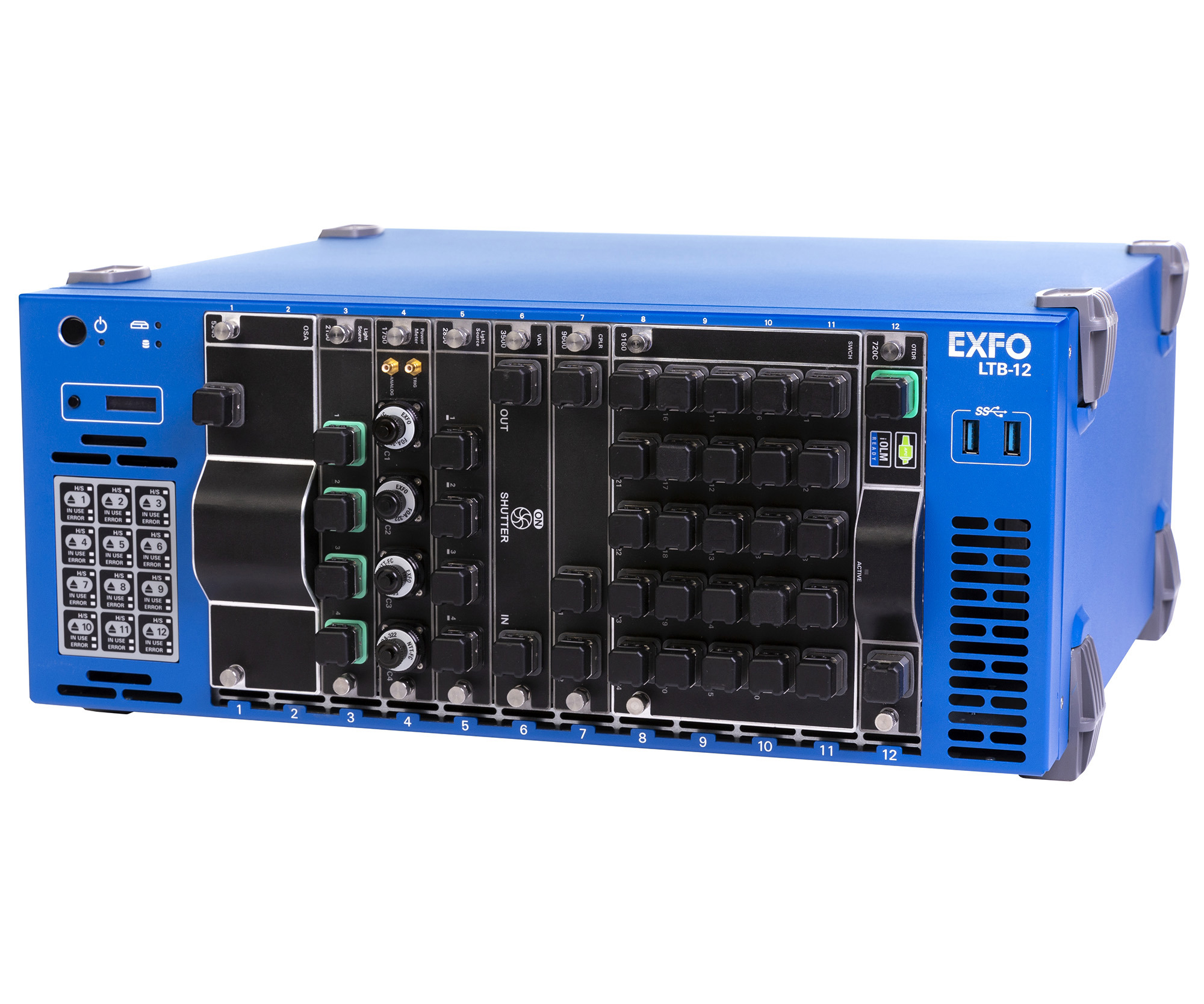

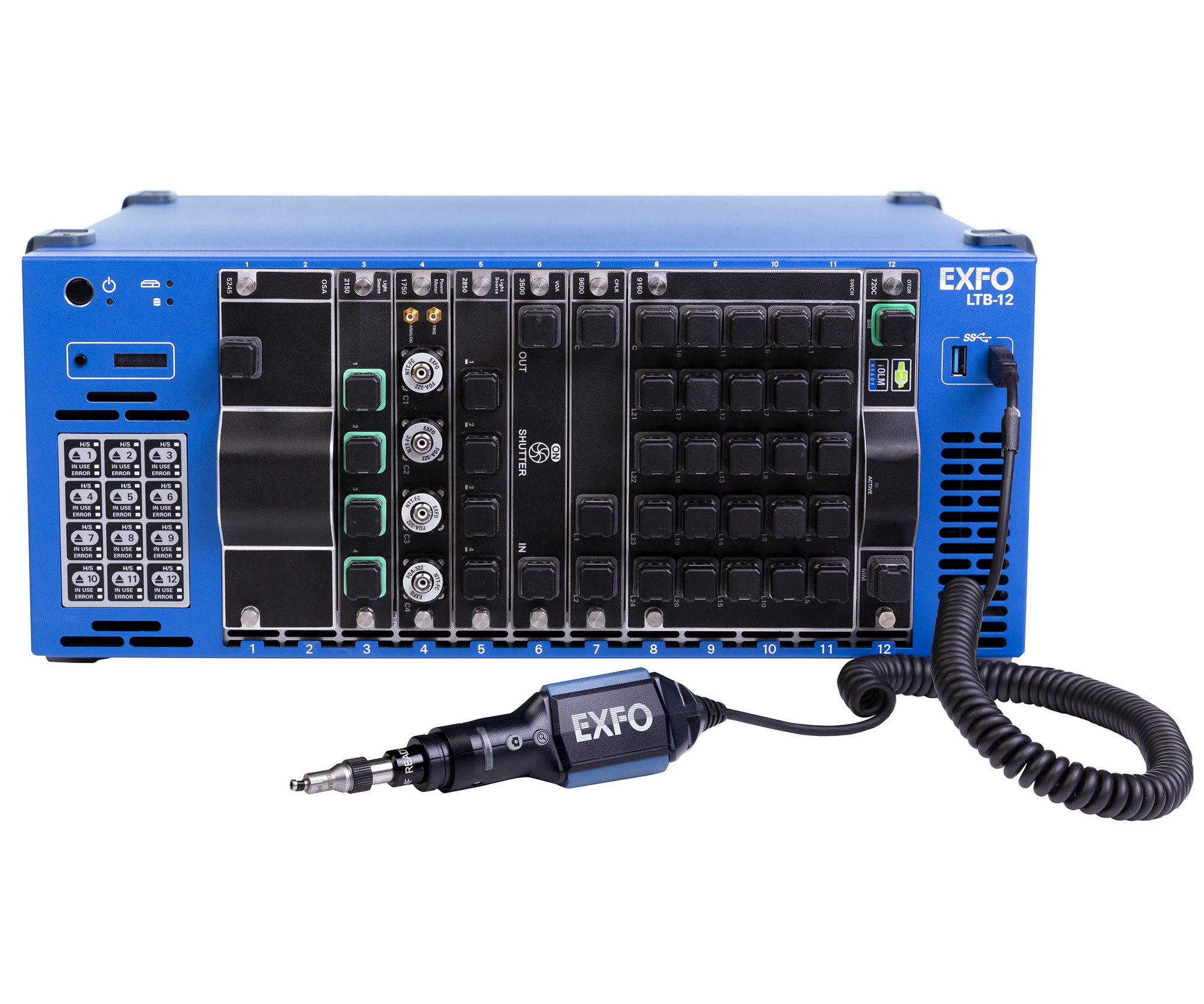
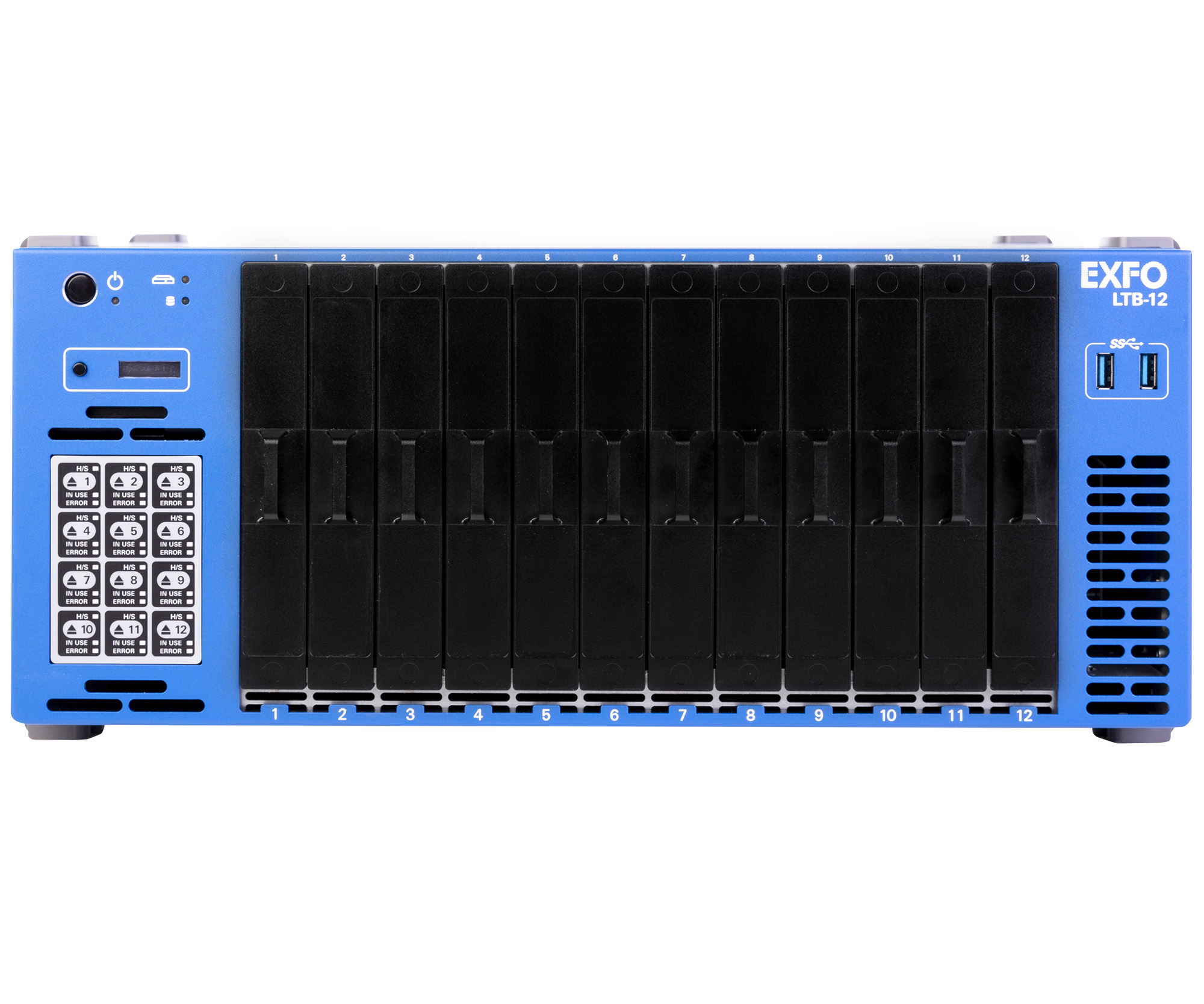
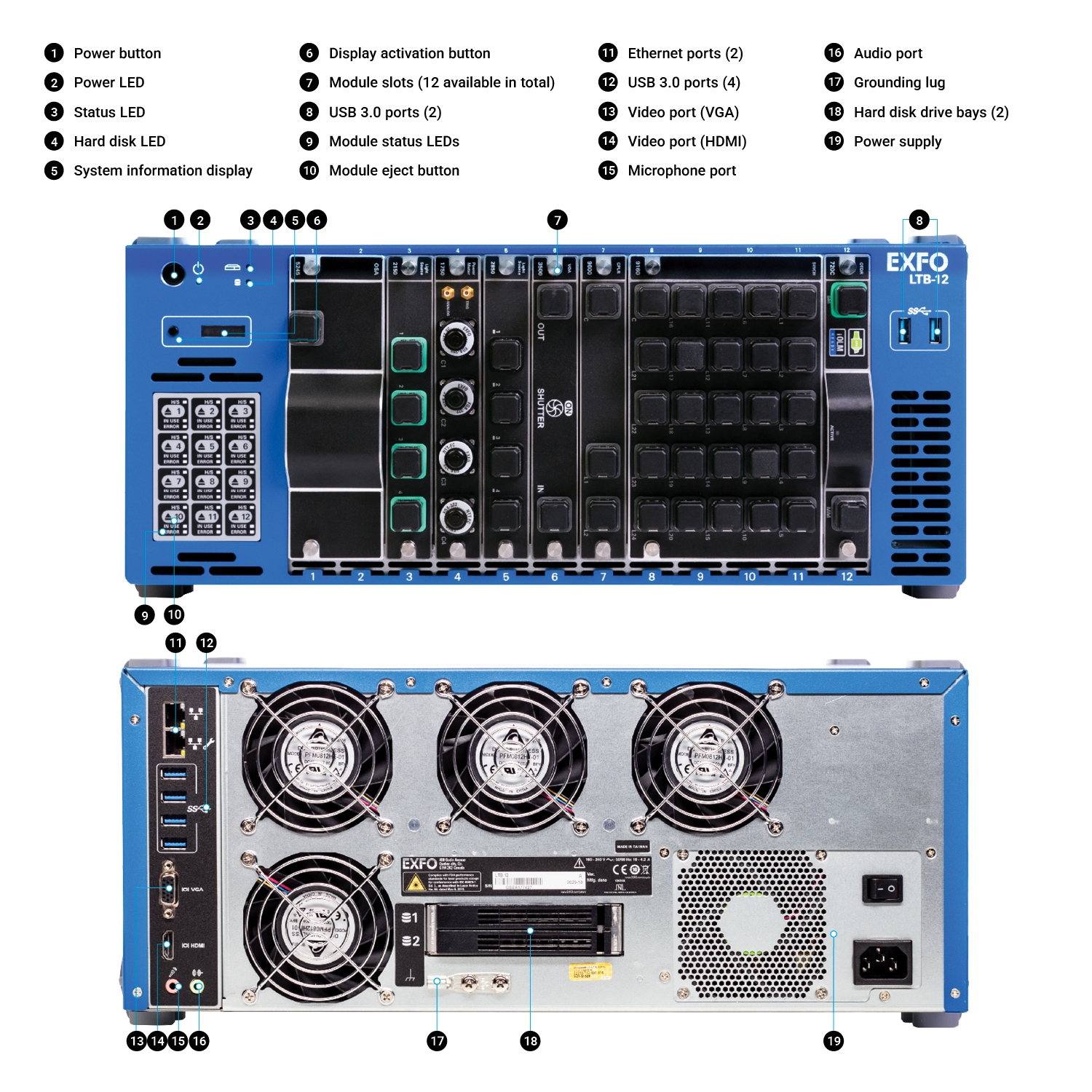
Compact 4U solution with high port module density for in-rack and tabletop applications
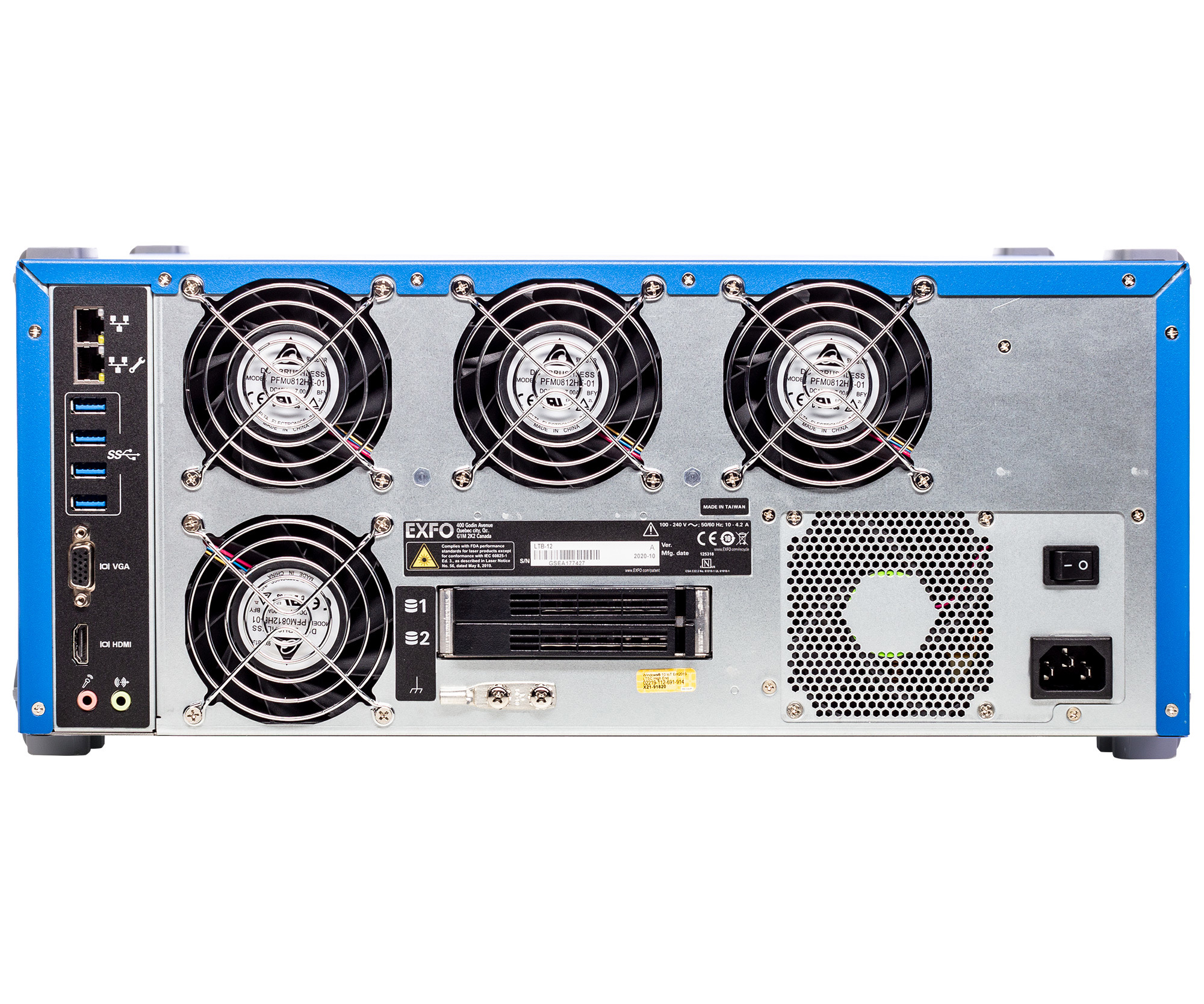
LTB-12 - rackmount modular mainframe
Overview
Bring power to your lab with a powerful, scalable and hot-swappable twelve-slot rackmount or benchtop platform designed for advanced lab and manufacturing photonic applications.

Applications
Active and passive component testing
Transceiver manufacturing
WSS and ROADM calibration and tests
Sensing and spectroscopy
Spectral characterization
System verification and design
Manufacturing/Industry 4.0
PIC wafer-level testing
Highlights
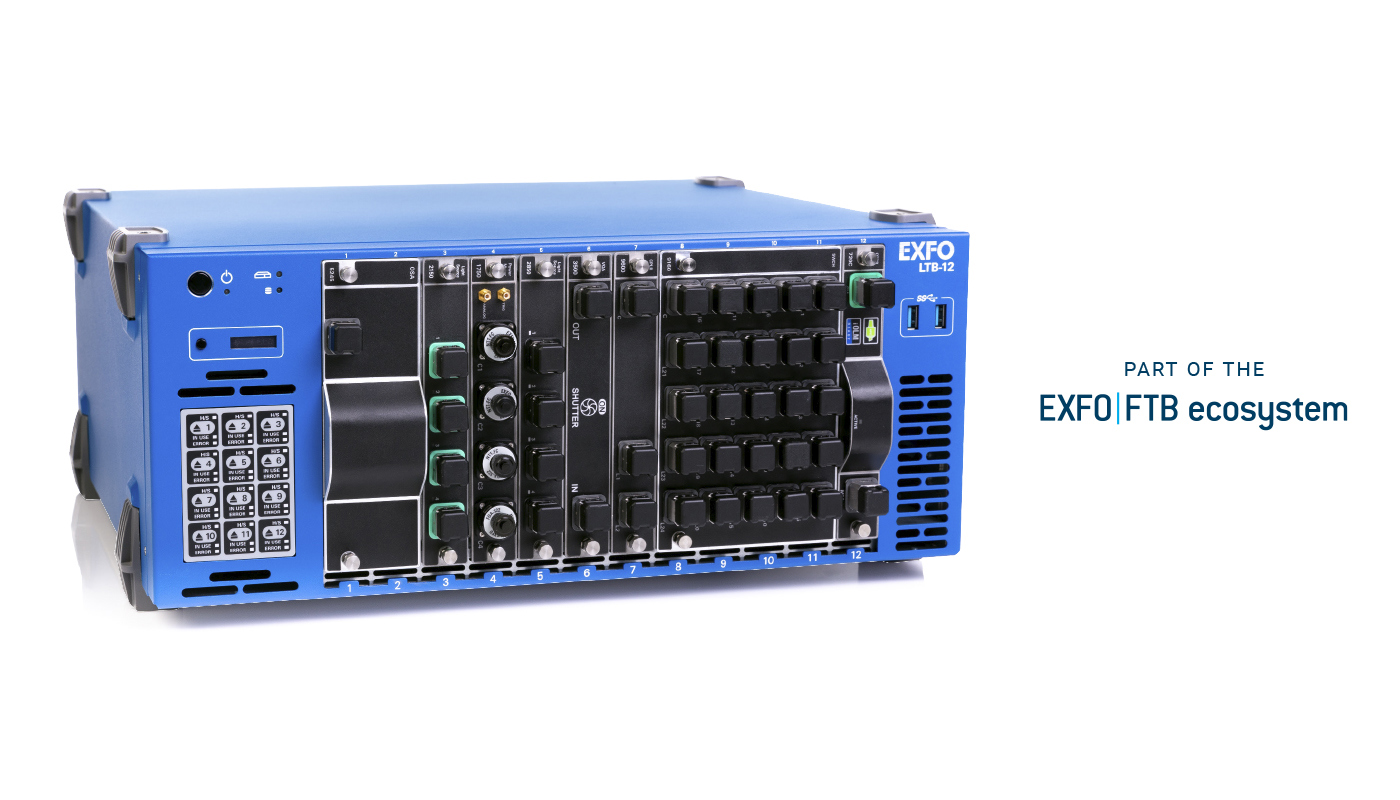
Supports optical test modules
Use the LTB-12 with EXFO’s FTBx optical module family for advanced optical testing.
It supports power sensing, attenuation, switching, spectrum analysis, light source and OTDR/iOLM functions, with a user-friendly graphical interface and the flexibility to combine capabilities for customized measurements.
Automation for manufacturing
The LTB-12 is ready for automation using industry methods including SCPI, IVI, RESTful Web services, TCP/IP, VISA, Ethernet, ActiveX, and optional GPIB and RS-232.
Install your preferred IDE on the LTB-12 hard drive, choose from Python, LabVIEW, C#, TCL, MATLAB®, C++, or Visual Basic, and start coding.

Fiber inspection and verification
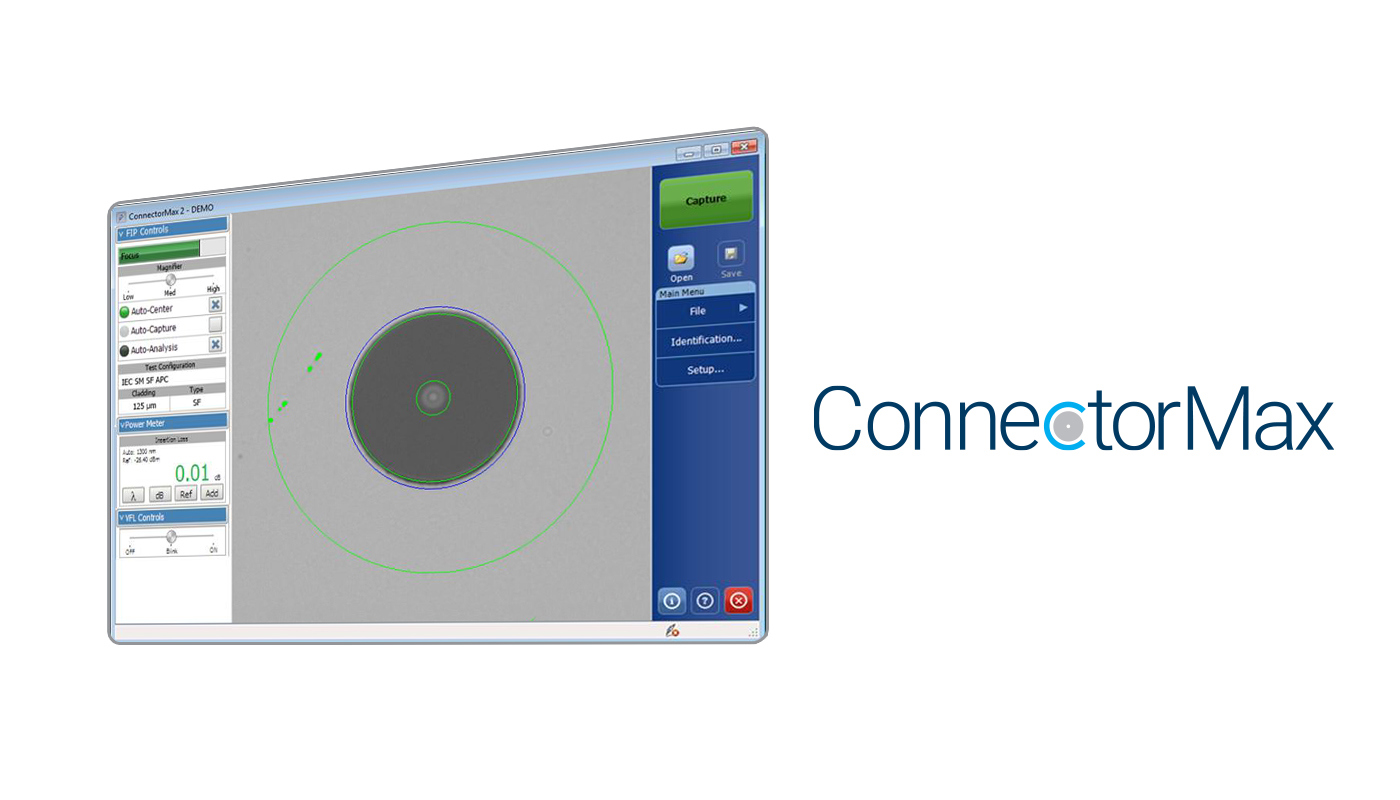
Connect the FIP-430B to a USB port on the LTB-12 and, with ConnectorMax2 Analysis Software, quickly check whether connectors pass or fail inspection.
The solution supports automated endface inspection, image analysis, pass/fail assessment, reporting, and process automation through EXFO’s RESTful Web services API and SDK.