


Simplifying the path to high-performance data center interconnects
AI-driven workloads are placing unprecedented demands on data center interconnects (DCI), requiring higher speeds, ultra-low latency and massive scale across campus, metro, core and long-haul environments. From build to assure, automated validation and continuous visibility into link behavior are essential to ensure reliable performance, accelerate deployment and simplify operations across current and next-generation DCI infrastructure.
Overcoming the complexity of modern DCI networks
AI is accelerating the evolution of fiber and transport networks—but with it comes growing pressure to deliver flawless performance, keep costs in check and improve operational efficiency across increasingly complex infrastructures.
AI driving stricter SLAs
Stricter SLAs are necessary to meet QoS standards and end-user expectations on upgraded high-speed networks (100G, 400G, 800G). With more users and devices relying on the network, downtime is simply not an option.
Ethernet networks evolving faster than ever
Rising speeds and advanced optics add complexity—making “plug-and-pray” approaches unreliable and testing crucial to ensure performance across all rates.
Juggling emerging transceivers
Coherent optics enable faster speeds and longer reach in metro, core, and DCI networks—but require thorough testing to ensure interoperability, minimize disruptions, and maintain network reliability.
Keeping CAPEX and OPEX in check
New technologies, including higher rates such as 800G and 1.6T, and emerging fiber types like hollow core and multicore fiber, increase testing complexity and require specialized skills and tools, driving up OPEX and CAPEX and adding pressure to adapt while managing costs.
Lack of real-time job compliance visibility
Lack of real-time job compliance visibility can lead to repeat site visits and truck rolls, driving up costs and delaying revenue due to quality issues.
Overcoming fiber diagnostic hurdles
Limited visibility makes fiber fault isolation challenging, increasing MTTR and network downtime. Eliminating costly manual fault-finding streamlines operations and maintenance while ensuring network reliability.
Test and validation for every DCI architecture
From initial deployment and service turn-up to ongoing operations and maintenance, each DCI architecture presents unique performance, scalability and operational challenges. Whether connecting AI clusters, metro facilities, regional data centers or transoceanic networks, comprehensive validation is essential to ensure reliable, high-performance connectivity at scale.

Connecting data centers within a campus
Key characteristics
- Latency-sensitive environment
- High fiber-count connectivity across multiple conduits
- 400G and 800G deployments today
- Migration toward 1.6T pluggable optics
Validation focus
- Fiber infrastructure qualification (ITU-T G.650.3)
- High-speed Ethernet service activation
- Latency and packet performance validation
- Rapid troubleshooting
High-capacity between AI training clusters
Key characteristics
- Massive east-west traffic flows
- Extreme bandwidth density requirements
- Low-latency back-end networks
- Accelerated migration to 800G and beyond
Validation focus
- End-to-end throughput validation
- High-density fiber verification
- Slicing validation
- Full fiber characterization (ITU-T G.650.3)
- Link performance benchmarking
- Rapid fault localization in large-scale fabrics
Regional and national-scale DCI transport
Key characteristics
- Multiple city-to-city corridors
- High fiber-count backbone routes
- Hundreds of fibers per route
- 400G and 800G coherent transport
- Planned evolution toward 1.6T wavelengths
Validation focus
- Slicing validation and full fiber characterization (ITU-T G.650.3)
- Coherent optics validation
- Optical spectrum and wavelength characterization
- Service turn-up and SLA verification
- Ongoing performance monitoring
- Rapid troubleshooting and fault isolation
Transoceanic and ultra-long-reach connectivity
Key characteristics
- Up to 24 fiber pairs per cable
- Longest-reach data center interconnects
- 200G-400G per wavelength
- 20-30 Tb/s per fiber pair
Validation focus
- Optical layer performance verification
- Coherent optics validation
- Commissioning and acceptance testing
- Capacity optimization
- Continuous performance assurance
- Rapid fault localization in case of a break
From fiber qualification to high-speed link activation
Qualify the state of the fiber, turn up and activate links, and assess data transmission integrity with EXFO’s comprehensive test portfolio. Our solutions validate high-speed transport networks end-to-end—from the physical to the protocol layer—with first-time right results, every time.
Fiber splice quality validation
As DCI networks continue to expand, new fiber routes and capacity upgrades require thousands of fiber splices to be completed accurately and consistently. Poor splice quality can introduce excessive loss and performance variability that may not be immediately apparent during deployment but can impact network reliability and future scalability.
Validating splice quality during construction is an important step to ensure fiber infrastructure is built to specification and capable of supporting high-speed services from day one. By identifying and correcting issues early, operators can reduce costly rework, accelerate project acceptance and establish a strong foundation for 400G, 800G and future 1.6T deployments.
Fiber characterization
As inter-data center bandwidth demand grows, new and leased dark fiber must be fully validated before service activation. Fiber characterization provides an end-to-end baseline of physical-layer performance using OLTS, OTDR, CD and PMD testing to confirm link quality and readiness. It identifies impairments such as loss, reflectance, bends or attenuation that can impact high-speed transmission and long-term reliability. This ensures certified infrastructure, reduces deployment risk, and accelerates turn-up for 400G, 800G and beyond.
High-speed link activation testing
Before a high-speed DCI link is placed into service, all optical components must be validated to ensure reliable operation. This includes transceiver qualification to verify optics and detect defects or performance issues early, followed by link activation testing to confirm end-to-end performance through BER, latency and jitter measurements. It also ensures interoperability between network elements and compliance with service requirements across 100G, 400G, 800G and emerging 1.6T networks, avoiding a costly “plug-and-pray” approach.
Service activation testing for DCI services
As organizations adopt DCI-as-a-Service and managed transport models, service activation testing ensures readiness and performance assurance at turn-up. It validates service behavior under different traffic types—including voice, video and data—with defined QoS and SLA requirements. High-speed links (100G, 400G, 800G) are also verified to ensure reliable transport between data centers, aggregation points and service hubs before production handover.
Identifying fiber degradations in live networks
Continuous, automated fiber monitoring enables rapid detection of degradations or disruptions in live networks, reducing mean-time-to-repair, minimizing downtime and preventing service impact. This is especially critical for high-bandwidth DCI links, where sustained link quality directly affects large-scale data movement between data centers and requires continuous validation to ensure performance and resilience.
In large-scale deployments, real-time visibility into fiber health is essential to quickly isolate faults and determine remediation actions. However, traditional remote fiber test approaches often fail to scale effectively, making them unsuitable for modern, high-capacity fiber networks.
Hollow core fiber validation
Hollow-core fiber (HCF) is an emerging technology that enables scale-across DCI connectivity by supporting longer distances between data centers while maintaining performance. By guiding light through air instead of glass, it delivers ultra-low latency and significantly reduced attenuation, enabling faster signal propagation and consistent high-performance transport over extended reaches.
As a fundamentally different transmission medium, HCF cannot be accurately validated using traditional fiber test methods, making proper qualification essential as adoption grows across high-performance and low-latency applications.
Measurable outcomes across DCI networks
Across AI-driven data center interconnects, metro aggregation layers, core transport systems, and long-haul infrastructure, network operators and hyperscalers report measurable gains in speed, reliability, and operational efficiency.
100% build traceability
Ensure full visibility across the fiber infrastructure, improving accountability and deployment accuracy.
<5% activation failure rate
Increase first-time-right deployments and reduce costly rework during service turn-up.
2x faster DCI deployments
Manage the high volume of ports at play, reducing test time and accelerating delivery at scale.
75% reduction in MTTR
Identify and localize faults faster, minimizing downtime and operational impact.
Where EXFO drives impact across the network lifecycle
EXFO supports every phase of the network—from fiber build and service activation to fiber monitoring and troubleshooting—through an integrated approach that delivers consistent, reliable performance at scale.

Proteja su inversión con servicios de asistencia de primera calidad
En EXFO, estamos profundamente comprometidos con ofrecer un servicio de excelencia a nuestros clientes. Somos conscientes de la importancia de la precisión y la fiabilidad, por lo que ofrecemos calibraciones realizadas por expertos, reparaciones fiables y garantías líderes en el sector para que sus instrumentos de prueba sigan funcionando al máximo rendimiento.
Nuestros servicios incluyen:

Reparaciones (RMA)

Servicios de calibración

Garantía ampliada

Servicio personalizado

Centros de servicio
Related products
EXFO Exchange - Plataforma de software abierta y colaborativa
Implemente y mantenga mejores redes de telecomunicaciones de forma más rápida y eficaz con la automatización de datos y pruebas.
Hollow Core Fiber OTDR Test Kit
High dynamic range combined with high resolution for hollow core fiber characterization
transceptores de 800G y pruebas de red para centros de datos y DCI
Solución de pruebas portátil de 100GE a 800GE para centros de datos y DCI. Descubre la serie HyperBlazer de EXFO y acelera la ampliación de los centros de datos.
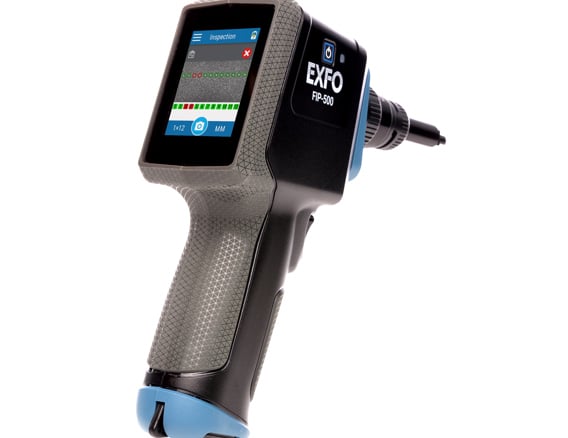
FIP-500 - visor de inspección de fibra
La inspección más rápida y la primera en la industria para conectores de una fibra, dúplex y de fibra múltiple, con los resultados más confiables. Herramienta autónoma y totalmente automatizada para realizar pruebas con cero botones durante todo el día, sin necesidad de recargar baterías ni descargar resultados.
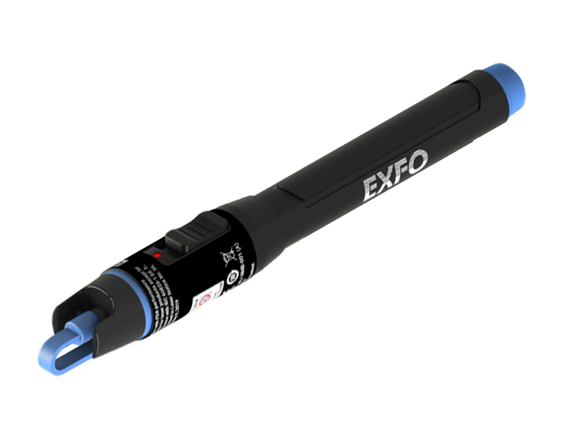
FLS-190 - Localizador visual de fallas (VFL) de alta potencia
El FLS-190 es un localizador visual de fallas (VFL) compacto con láser rojo de 650 nm para detectar fallas en fibras ópticas hasta 12 km. Ofrece una potencia de salida de 5 mW y modos de funcionamiento intermitente y continuo.
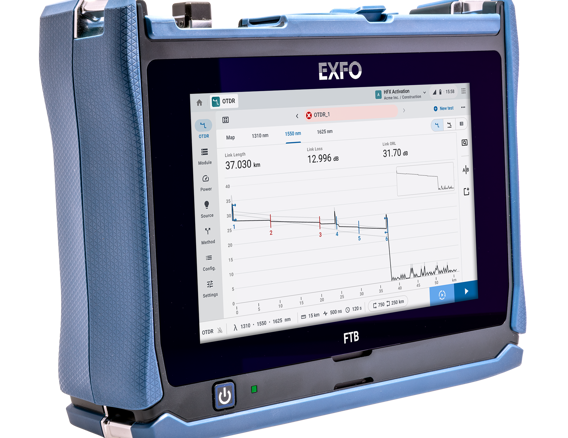
FTB Lite 750D - OTDR conectado para redes metropolitanas y de largo alcance
Conectividad permanente y usabilidad optimizada para pruebas eficientes, seguras y que cumplen con las normas.
FTB Lite 975 - Certificador de simplex, dúplex y fibra múltiple bidireccional
El EXFO FTB Lite 975 es un certificador de fibra óptica automatizado y conectado que combina pruebas OLTS bidireccionales de nivel 1 y funciones compatibles con OTDR. Admite conectores simplex, dúplex y multifibra de hasta 24 fibras.
FTBx-5235 - analizador de espectro óptico
Nuevo y compacto analizador de espectro óptico (OSA) diseñado para medir la potencia y longitud de onda del canal, caracterizar las implementaciones de PHY remotas y analizar redes de multiplexación por división de longitud de onda densa (DWDM).
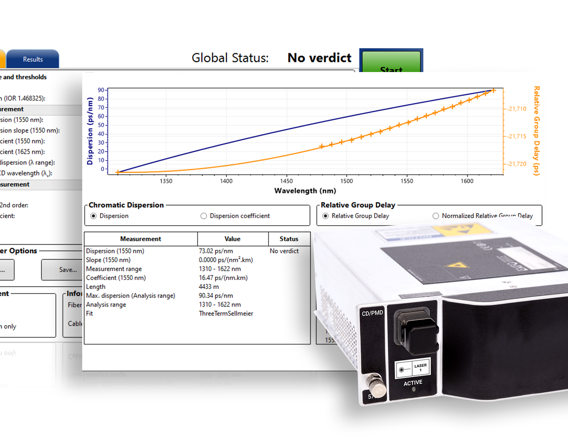
FTBx-570 - Analizador de dispersión de un solo extremo
La única solución del sector para pruebas rápidas de CD/PMD de un solo extremo.
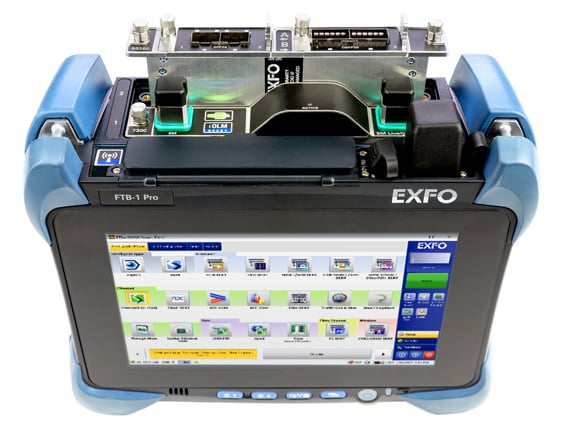
FTBx-88260 - módulo de pruebas multiservicio de 1G a 100G
Módulo de pruebas de 1G-100G personalizables (incluye 25G/50G) diseñado para diversos tipos de transceptores a través del Sistema de transceptor abierto (OTS) de EXFO
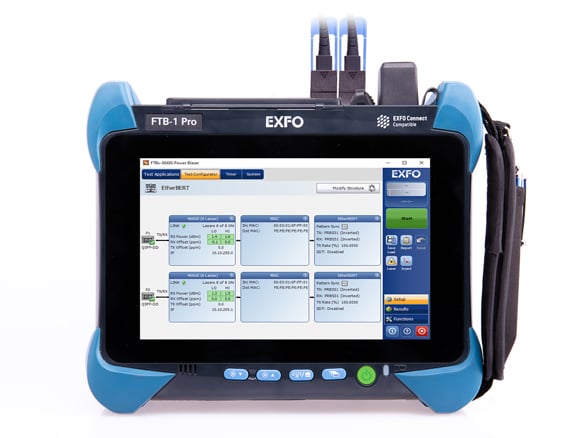
FTBx-88480 Series - Probador compacto para puerto dual de 400 GB para el campo
Una solución compacta y multiservicio para pruebas de 400 GB construida con líneas eléctricas de 112 GB y el sistema de transceptor abierto (OTS) modular de EXFO.
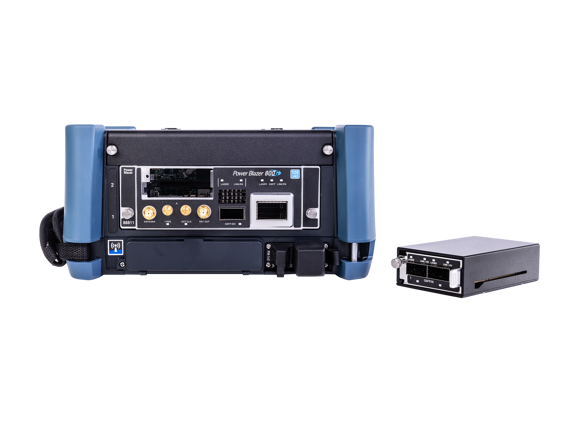
FTBx-88810
FTBx-945 Telco OLTS
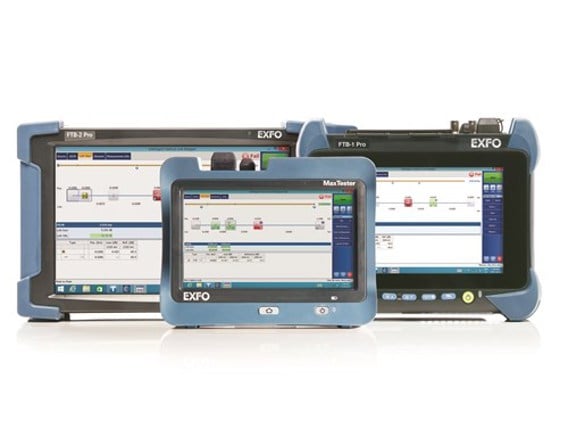
iOLM - asignador de enlace óptico inteligente
Pruebas de fibra de uno y varios modos automatizada a nivel de expertos que elimina la necesidad de configurar manualmente los parámetros o analizar e interpretar múltiples seguimientos complejos del OTDR
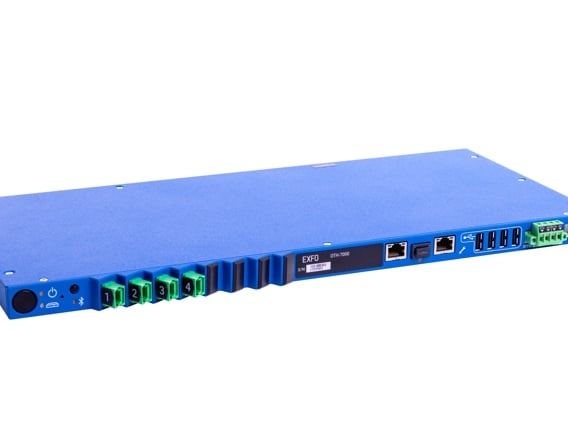
OTH-7000
EXFO RFTM - Pruebas y supervisión remotas de la fibra
Solución inteligente basada en OTDR para probar y supervisar enlaces de fibra (P2P y PON) desde la construcción hasta el mantenimiento.
Resources
More resources and languagesLanguage
Resource type