

What Is Hollow-Core Fiber? Benefits, Use Cases, and Why It Matters
What is hollow-core fiber, and why does it matter for ultra-low-latency networks? Hollow-core fiber (HCF) guides light primarily through air rather than solid glass, enabling up to 40% faster signal propagation while reducing some forms of signal distortion and nonlinear effects.
In this video, learn how hollow-core fiber works, its key benefits and limitations, and where it can provide an advantage, including data-center interconnects, financial trading networks, AI infrastructure, and high-performance computing.
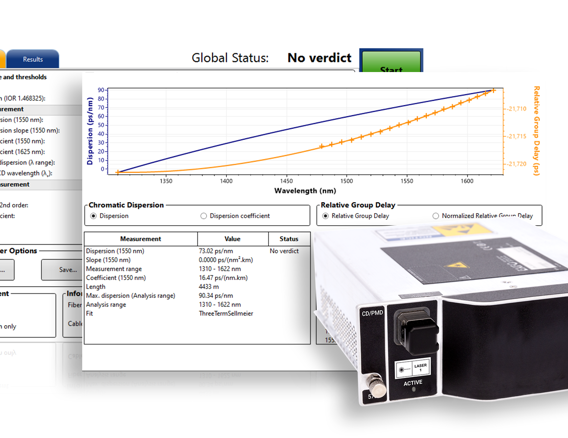
You’ll also discover why testing is critical as HCF moves into real-world networks. Explore the measurements needed to validate hollow-core and hybrid HCF/singlemode fiber links, including latency, loss, reflectivity, bit error rate (BER), chromatic dispersion (CD), polarization mode dispersion (PMD), and overall link performance.