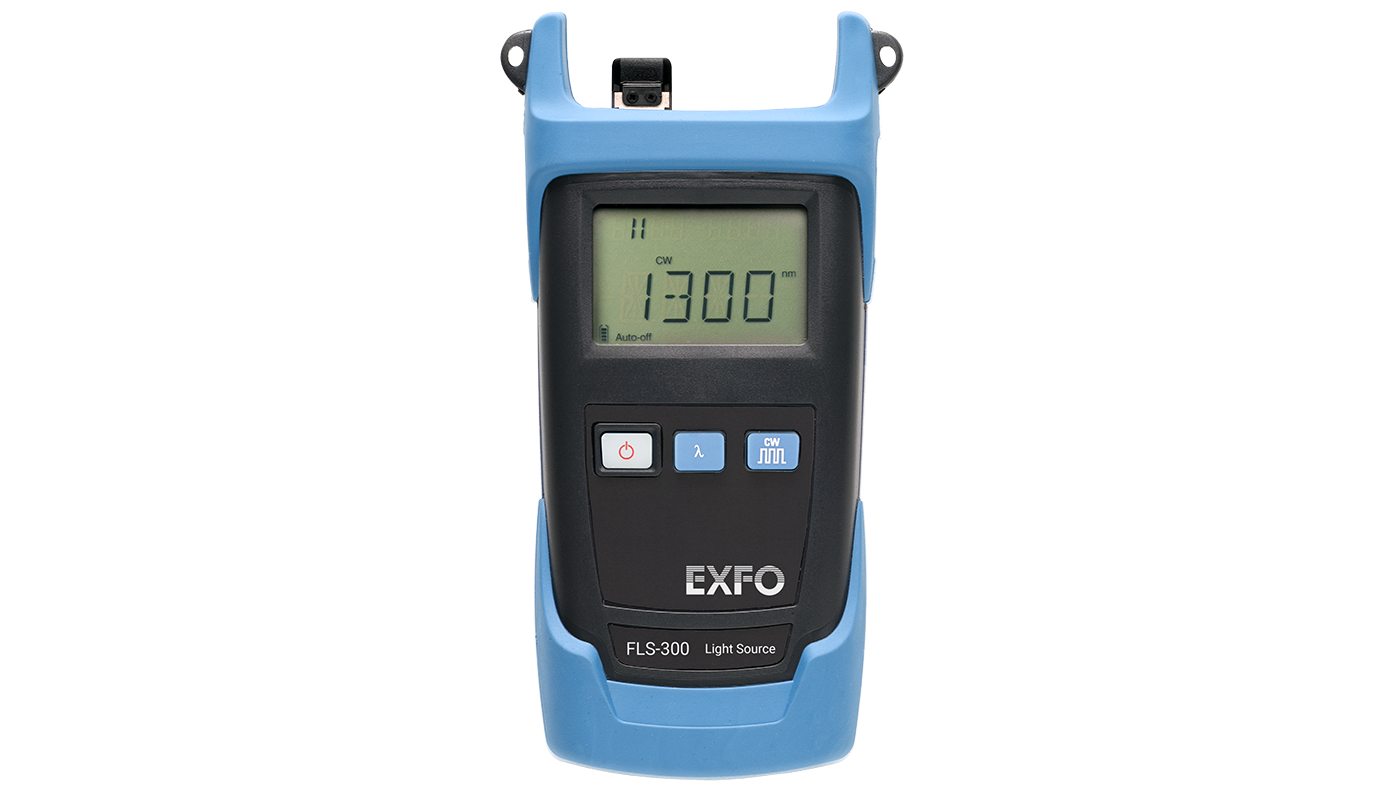


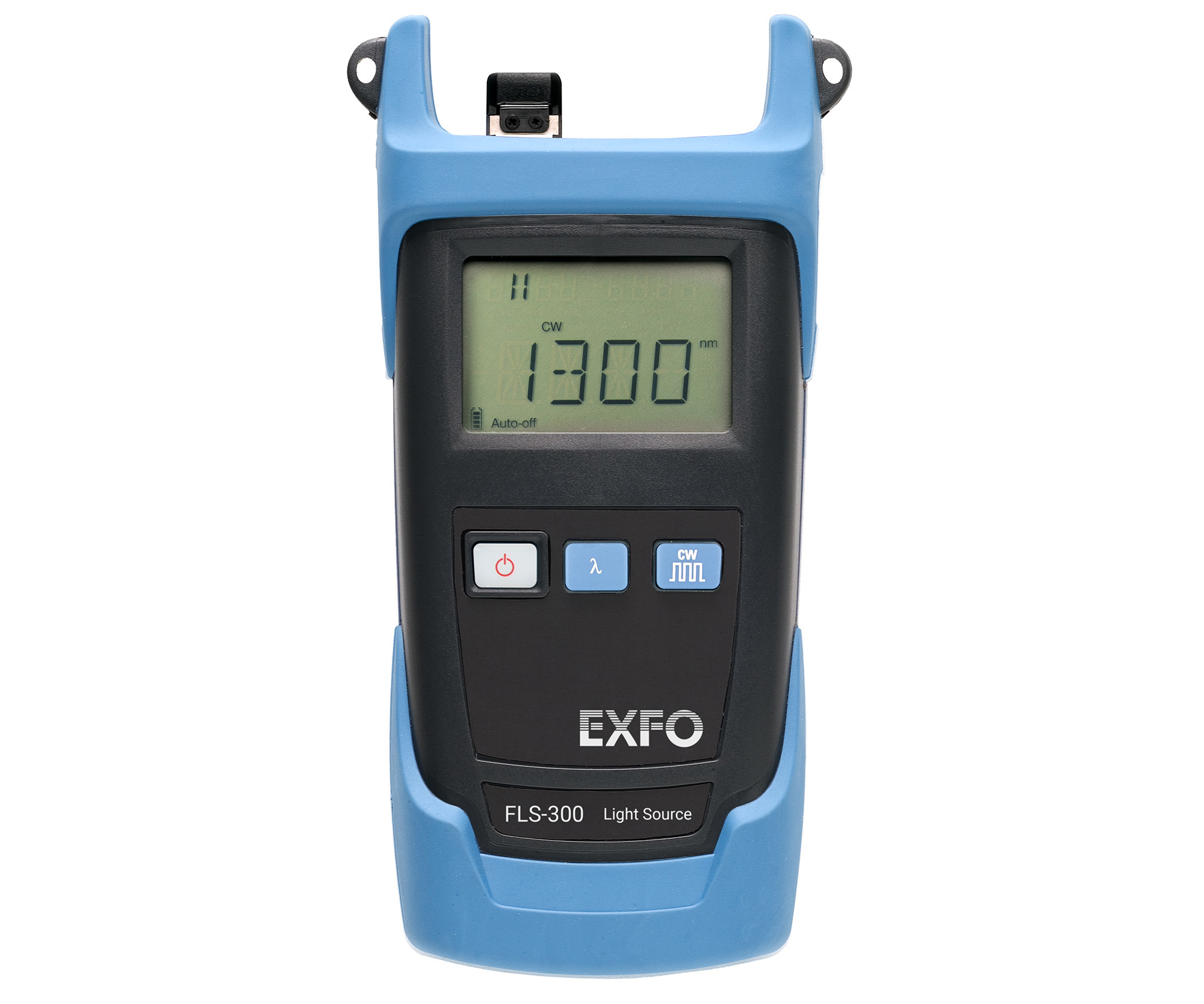
Puede transmitir con un protocolo digital cifrado de identificación de longitud de onda, para que cualquier unidad compatible pueda utilizar de forma automática los parámetros de calibración adecuados
FLS-300 - Fuente de luz
Resumen
La fuente de luz más versátil y completa disponible con hasta tres longitudes de onda monomodo en un puerto único, o cuatro longitudes de onda (dos multimodo y dos monomodo) en dos puertos.

Aplicaciones
Caracterización de pérdida de enlaces
Identificación de fibra
Aspectos destacados
With up to three singlemode wavelengths on a single port, or four wavelengths (two multimode, and two singlemode) on two ports, the FLS-300 is the most versatile, complete light source available.
An FTTx test solution: This product is part of EXFO's series of FTTx optical test products. It allows for the testing of passive optical networks (PONs) at the three main wavelengths (1310, 1490 and 1550 nm) used in fiber-to-the-home (FTTH) and fiber-to-the-premises (FTTP) networks and complies with the ITU-T G.983 and G.984 Recommendation series and the IEEE 802.3ah standard.
Auto-wavelength recognition: The FLS-300 Light Source can transmit with a wavelength-identification digital encrypted protocol, so that any compatible unit—the FPM-300 Power Meter and the FOT-300 Optical Loss Test Set—can automatically use the proper calibration parameters. This feature reduces the need for communication between the two technicians and decreases the potential for error.
Distant referencing: Signal encrypting can also give the receiving end information on the power to be used as reference, helping ensure efficient referencing, even when the two units are far apart.